Ethiopia uses its own calendar with 13 months: twelve months of 30 days and a short thirteenth month of five or six days. It runs about seven to eight years behind the Gregorian calendar, and its new year begins in September, so in November 2026 it is still the Ethiopian year 2019.
For a traveller this is part of the experience, but the bigger planning questions are size, altitude, weather and security. Ethiopia covers 1,104,300 square kilometers, so choose a region and check current travel advice first.
For the quick version of this page, see our Ethiopia travel guide. We also wrote about the hottest inhabited place on Earth in our Dallol guide.
The Ethiopian year has twelve months of 30 days, followed by a short month of five days, or six in a leap year. The year runs about seven to eight years behind the Gregorian calendar because it counts from a different date for the birth of Jesus. The new year, Enkutatash, falls in September.
Practically, this means you may see two dates on documents and signs. Check which calendar an event or a ticket uses, and confirm dates in writing when you book transport and tours. Ethiopians also traditionally count the hours of the day from sunrise rather than midnight, so ask whether a time is meant in local or international style.
Ethiopia is the 26th-largest country in the world, with 1,104,300 square kilometers and about 138 million people as of 2026, the second most populous country in Africa. The capital and largest city is Addis Ababa. The currency is the birr, and the time zone is UTC+3.
The official languages include Amharic, Oromo, Somali, Tigrinya and Afar. The Ethiopian Highlands are the largest continuous mountain range in Africa, which shapes the climate and the landscape.
Aksum was once a major kingdom with its own ancient civilisation, and at times its ruler governed parts of Yemen. Lalibela was a capital of the Zagwe dynasty. Italy invaded in 1935 and ruled from 1936 to 1941, but Ethiopia, along with Liberia, is described as the only African country never fully colonised.
That history is a point of national pride and explains much of what you will see in museums and monuments.
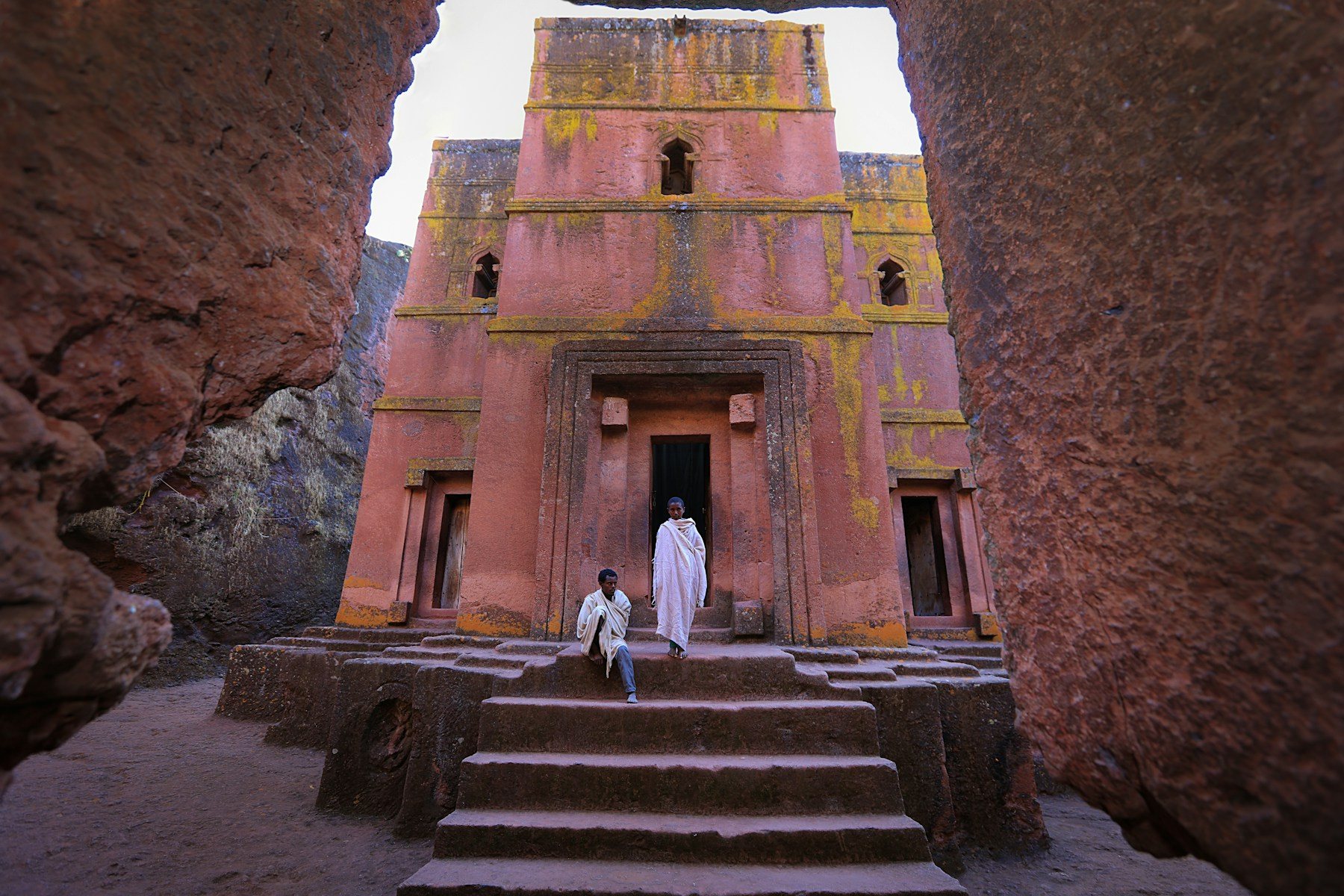
Ethiopia has the second-largest number of UNESCO World Heritage Sites in Africa, tied with South Africa in some counts. Lalibela is best known for its rock-hewn churches, carved down into the rock and still used for worship. The church of St George, shown on this page, is one of the best-known.
These are active places of worship. Dress modestly, remove shoes where asked, ask before taking photographs and follow the guidance of priests and guides.
Ethiopia is often considered the birthplace of coffee, with cultivation said to have begun in the 9th century. The traditional coffee ceremony is a central social ritual, and being invited to one is a good way to meet people. Accept with thanks, and expect more than one cup.
In Addis Ababa, the dry season runs from October to February, a light rainy season from March to May and a heavy rainy season from June to September. The highlands are cooler than many visitors expect, while low areas such as the Danakil Depression are among the hottest places on Earth, with Dallol having the highest average annual temperature in the world at 34 °C.
The dry season is the main time for travel, but conditions vary by region, so check before you plan.
Conditions in Ethiopia differ by region and can change quickly. Some areas have had conflict or have travel restrictions, so check your government's current travel advice before you book and again before you leave. Choose routes and operators that follow current guidance, carry insurance that covers the places you plan to visit, and keep your plans flexible.
Ethiopian Airlines is the country's biggest company, with annual revenue of 6.1 billion dollars, and it connects Addis Ababa with many international destinations and with cities inside the country. We have not verified current schedules, so check them directly. Entry rules and visa requirements depend on your passport and change, so confirm them with official sources.
Roads can be slow, and distances are large, so use domestic flights for long legs where possible.
Addis Ababa has the widest choice. In other regions, options are fewer and quality varies, so book ahead where you can and confirm directly. Carry some cash in birr, since cards are not accepted everywhere, and check what works with your bank. Bring any medication you need, and take advice on health precautions before you travel.
Ethiopian food is built around injera, a sourdough flatbread, served with stews known as wat and with vegetable and meat dishes, usually eaten by hand from a shared plate. Orthodox fasting days are common, and on those days many restaurants serve vegan dishes, which makes it easy for vegetarians. Ask your hosts about local specialities, and try the coffee at least once as a full ceremony.
Addis Ababa is the capital and the largest city, and it is where most trips start and end. It sits high in the highlands, so expect cooler evenings and, for some visitors, mild effects of altitude on the first day. Allow time for the markets, museums and coffee houses, and use licensed taxis or ride services for getting around, especially at night.
Choose a region and take your time.
This is our own suggestion, not an official itinerary.
Ethiopia has many ethnic groups and several religions, with Orthodox Christianity and Islam especially visible. Ask before photographing people, dress modestly, and follow local customs at churches and mosques. A few words of Amharic, such as thank you, are warmly received.
13: twelve of 30 days and a short month of five or six days.
About seven to eight years behind the Gregorian calendar.
In September.
Addis Ababa.
Italy occupied it from 1936 to 1941, but Ethiopia is described as never fully colonised.
The birr.
October to February in Addis Ababa.
It is often considered the birthplace of coffee, with cultivation said to have begun in the 9th century.
Addis Ababa has the widest choice of places to stay. In other regions options are fewer, so book ahead and confirm directly. Compare prices and reviews, and check the cancellation terms before you reserve.
See stays in Addis Ababa on Booking.com →
Some links on this page are affiliate links. If you book through them, Letsa Atlas may earn a small commission at no extra cost to you.
We checked this guide on November 10, 2026. Security conditions, entry rules, prices and transport change, so check your government’s travel advice and official sources before you go. Confirm details with official sources before you go.
Sources checked November 10, 2026: Wikipedia: Ethiopia · Ethiopian Airlines