A practical guide to Switzerland: how a country of 26 cantons and four languages is organised, what the Alps mean for any trip, and how to plan a visit in a country with some of the highest prices in Europe.
Switzerland has no de jure capital. Bern is the federal city and the seat of the national government. The country covers 41,291 square kilometers, has 26 cantons, six of them half-cantons, and had an estimated 9,154,242 residents in 2026. The Alps cover about 60 percent of its area, while most people live on the Swiss Plateau.
For travellers, the key facts are simple: it is a compact country with excellent mountain scenery, four national languages and high prices. A good trip uses one or two bases and picks a few places carefully.
For the quick version of this page, see our Switzerland travel guide.
Switzerland has no de jure capital. Bern is called the federal city and is the seat of the national government. The executive, the Federal Council, has seven members elected by the Federal Assembly for four-year terms. The presidency rotates every year and carries no extra powers.
The country has 2,110 municipalities as of 2026, and many decisions are made at the level of the cantons, so you will see differences in rules and customs as you move from one to another.
German is spoken by 62 percent of the population, French by 23 percent, Italian by 8 percent and Romansh by 0.5 percent. Which language you meet depends on the region: German in the north and centre, French in the west, Italian in the south and Romansh in parts of the east.
English is widely understood in tourist areas, but a greeting in the local language goes a long way.
The Alps cover about 60 percent of the country. Monte Rosa is the highest peak at 4,634 meters, the Matterhorn is 4,478 meters and the Jungfrau 4,158 meters. In total, 48 mountains reach 4,000 meters or more.
Mountain weather changes fast, and conditions on trails and lifts vary by season. Check forecasts, carry layers and follow local advice before any high-altitude plan.
Switzerland has followed a policy of armed neutrality since the 16th century and has not fought an international war since 1815. Our video focuses on the country's civil-protection shelters, which are part of that culture of preparedness. We have not verified exact figures for the shelters here, so check the Swiss federal civil-protection authority for current numbers.
For a visitor, the effect is mostly in everyday details: well-organised public services and a strong sense of planning.
The climate is generally temperate but varies widely, from glacial conditions on the mountaintops to a near-Mediterranean climate in the south. The national average temperature has risen by 2.9 °C since 1871 to 1900, and 2022 was the warmest year since records began in 1864, at 7.4 °C.
Summer suits hiking and lakes, and winter suits skiing. Spring and autumn are quieter, but some mountain lifts and huts close between seasons, so check before you go.
The currency is the Swiss franc. Zurich, Geneva and Basel rank among the highest in quality of life, but they also have some of the highest costs of living. We have not verified current prices, so check before you budget.
To keep costs manageable, choose a base, buy transport passes only when they pay off, eat the lunch menu and bring water, since tap water is generally the cheapest option.
Switzerland is compact, and public transport is the usual way to travel. We have not verified timetables, so use the official journey planner. Mountain railways and cable cars often run on seasonal schedules.
Entry rules depend on your passport and can change, so confirm them before booking.
Bern, Zurich, Lucerne and Interlaken are common bases. Book early for summer and the ski season, and check whether your hotel includes a visitor card for local transport. Carry some Swiss francs and a card.
Bern is a compact city that is easy to see on foot, and it is a good first stop because it combines the federal institutions with an old town. Because it is the federal city, you can learn how the country is organised and then take a short train to the lakes or the Bernese Oberland.
Check opening hours for visitor tours of public buildings, since they depend on parliament sessions and security rules.
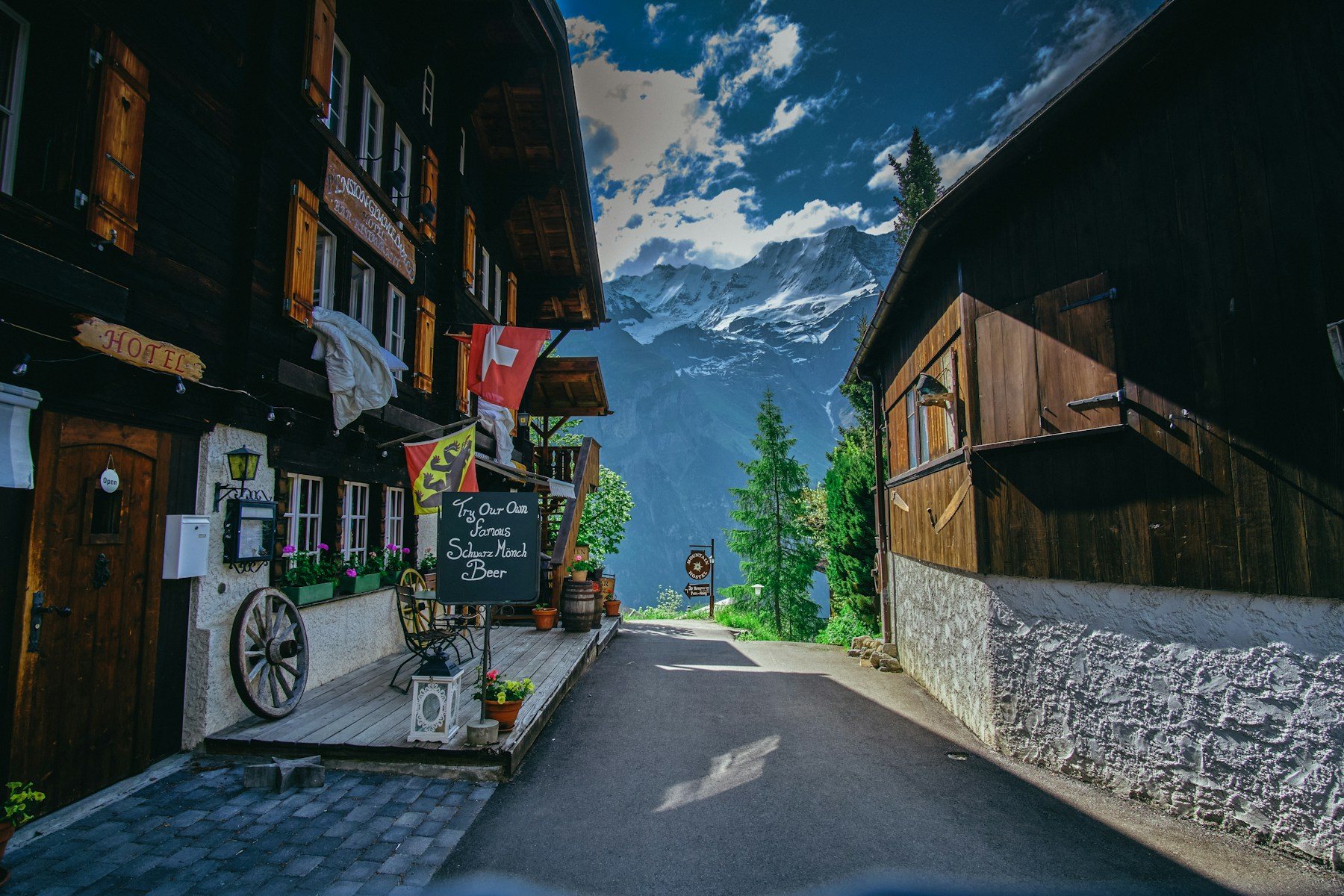
The Jungfrau region, at 4,158 meters, is one of the best-known mountain areas, and villages such as Gimmelwald sit far below the peaks. Cable cars and railways reach high viewpoints, but they run on seasonal schedules and weather can close them. Plan an alternative for cloudy days.
Smaller villages are quiet, so arrive with supplies, and respect farmland and residents.
Swiss trails are well marked, but mountains are mountains. Check the forecast the morning you go, carry water, layers and a map, tell someone your plan and turn back if conditions change. Snow can remain on high routes into early summer, and lifts may close earlier than you expect.
Respect cows and farm animals, keep dogs under control where required and close gates behind you.
Food depends on the language region: cheese dishes and chocolate are famous, but you will also find Italian-style food in the south and French-influenced cooking in the west. Restaurants can be expensive, so many visitors use bakeries and supermarkets for lunch, and lunch menus when eating out. Shops often close early on Sundays, so plan ahead.
These are the kinds of places visitors look for.
These are our own suggestions, not official itineraries.
Dress in layers and bring sturdy shoes. Book mountain transport early in peak season, and always check conditions the same morning. Respect quiet hours in villages, keep to marked trails and close gates on farmland. The country runs on time, so plan connections carefully and be on time yourself.
Tap water is safe to drink almost everywhere, so carry a bottle and refill it. Learn which language region you are in and greet people accordingly, and keep a little cash for mountain huts and small shops that may not take cards.
There is no de jure capital. Bern is the federal city and seat of the national government.
26, six of which are half-cantons.
German 62 percent, French 23 percent, Italian 8 percent and Romansh 0.5 percent.
Monte Rosa at 4,634 meters.
The Swiss franc.
41,291 square kilometers.
Yes, it has followed a policy of armed neutrality since the 16th century.
About 60 percent.
Choose a base such as Bern, Zurich or Interlaken and use public transport for day trips, since prices are high and distances are short. Compare prices and reviews, and check the cancellation terms before you reserve.
See stays in Interlaken on Booking.com →
Some links on this page are affiliate links. If you book through them, Letsa Atlas may earn a small commission at no extra cost to you.
We checked this guide on November 10, 2026. Prices, timetables and mountain-transport schedules change, so confirm them with official sources before you go. Confirm details with official sources before you go.
Sources checked November 10, 2026: Wikipedia: Switzerland · Switzerland Tourism