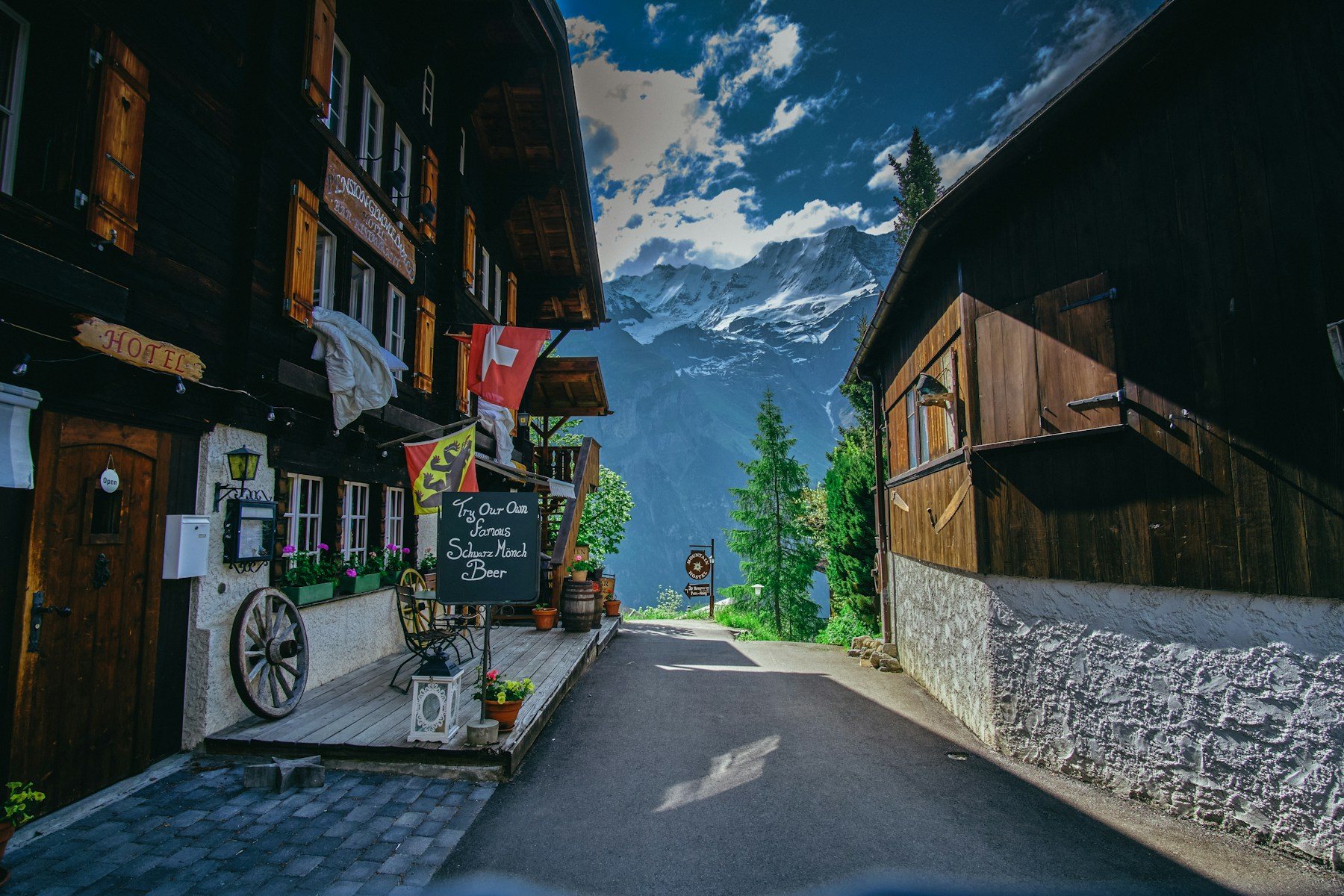
A small country built around the Alps
Switzerland covers 41,291 km² and had an estimated 9,154,242 residents in 2026. It has no de jure capital: Bern is the federal city and the seat of the national government. The country has 26 cantons, six of them half-cantons.
The Alps cover about 60 percent of the country, while most people live on the Swiss Plateau. Monte Rosa is the highest peak at 4,634 m, the Matterhorn is 4,478 m and the Jungfrau 4,158 m, and 48 mountains reach 4,000 m or more.
The languages are German (62 percent), French (23 percent), Italian (8 percent) and Romansh (0.5 percent). The currency is the Swiss franc, and Switzerland has followed a policy of armed neutrality since the 16th century, not fighting an international war since 1815.
For a visit, the country is compact and well connected, so the best plan is usually a base in one or two places and day trips by public transport. Switzerland is among the most expensive countries to visit, and Zurich, Geneva and Basel have some of the highest costs of living, so choose where you spend carefully. Mountain weather changes fast, and some lifts and huts run only in season, so check conditions before you go. English is widely understood in tourist areas, but a greeting in German, French, Italian or Romansh depending on the region is always appreciated.
The executive is the seven-member Federal Council, with a presidency that rotates every year and carries no extra powers. Our video is about the country’s civil-protection bunkers; this guide covers the visit itself.
From our Letsa Atlas Short · Watch on YouTube