A practical guide to South Africa: why the government is split between three cities, how the landscapes and seasons differ, and how to plan a trip that does not try to cover everything.
South Africa has three capitals, divided by branch of government. Pretoria is the executive capital, Cape Town the legislative capital and Bloemfontein the judicial capital. The Constitutional Court, the highest court, has been based in Johannesburg since 1994.
For a traveller, the practical point is that the country is large, with 1,221,037 square kilometers, nine provinces and 12 official languages. It has an estimated 63 million people, and the trip you plan depends far more on region and season than on the capitals.
For the quick version of this page, see our South Africa travel guide.
The government is split across three cities: Pretoria for the executive, Cape Town for the legislature and Bloemfontein for the judiciary. The highest court on constitutional matters, the Constitutional Court, has been in Johannesburg since 1994.
For visitors this matters mostly for cities and routes. Cape Town is a major destination, Pretoria is near Johannesburg, and Bloemfontein is a stop on the long road across the interior.
South Africa covers 1,221,037 square kilometers and is divided into nine provinces. The 2022 census counted 62,027,503 people, and the 2024 estimate is 63,015,904. The currency is the South African rand, and the time zone is UTC+2.
There are 12 official languages. English is widely used in tourism, but you will hear many languages in daily life, and a greeting in the local language is always welcome.
Discriminatory apartheid laws began to be repealed in the mid-1980s, and universal elections were held in 1994, when the ANC won by an overwhelming majority. This history is visible in museums, townships and place names, and engaging with it respectfully is part of a good visit.
Kruger National Park covers 19,633 square kilometers in Limpopo and Mpumalanga and is the best-known safari destination. The Drakensberg is the eastern, highest stretch of the Great Escarpment, with Mafadi at 3,450 meters as the country's highest point.
In the Western Cape, the fynbos of the Cape Floristic Region holds more than 9,000 plant species in a small area. It is a rare concentration of plant life, and climate change is predicted to hit it hard.
South Africa is tied with Ethiopia for the most UNESCO World Heritage Sites in Africa. They include the Cradle of Humankind, a region known for early human fossils. Visits to such sites are usually better booked ahead and combined with a guide.
Winter runs from June to August. The extreme south-west has a Mediterranean-type climate, with wet winters and hot, dry summers, and the Cape Peninsula receives most of its rain in winter. Johannesburg sits at 1,740 meters and gets about 760 millimeters of rain a year.
Temperatures range widely. The coldest recorded on the mainland was -20.1 °C in the Eastern Cape in 2013, and the official highest was 48.8 °C at Vioolsdrif in January 1993. Check the climate for the specific region and month, since the answer changes across the country.
The country is large, so internal flights are common between Cape Town, Johannesburg and other cities, and hiring a car is the usual way to reach parks and the countryside. We have not verified current schedules or prices, so check them directly. Allow extra time for long drives.
Entry rules depend on your passport and can change, so confirm them before booking.
Cape Town and Johannesburg offer the widest range of places to stay. Near Kruger and other parks, book well ahead in the main season. Bring a card that works abroad and some rand in cash, and take standard precautions with valuables, as in any large city. Ask your hosts about safe areas and transport at night.
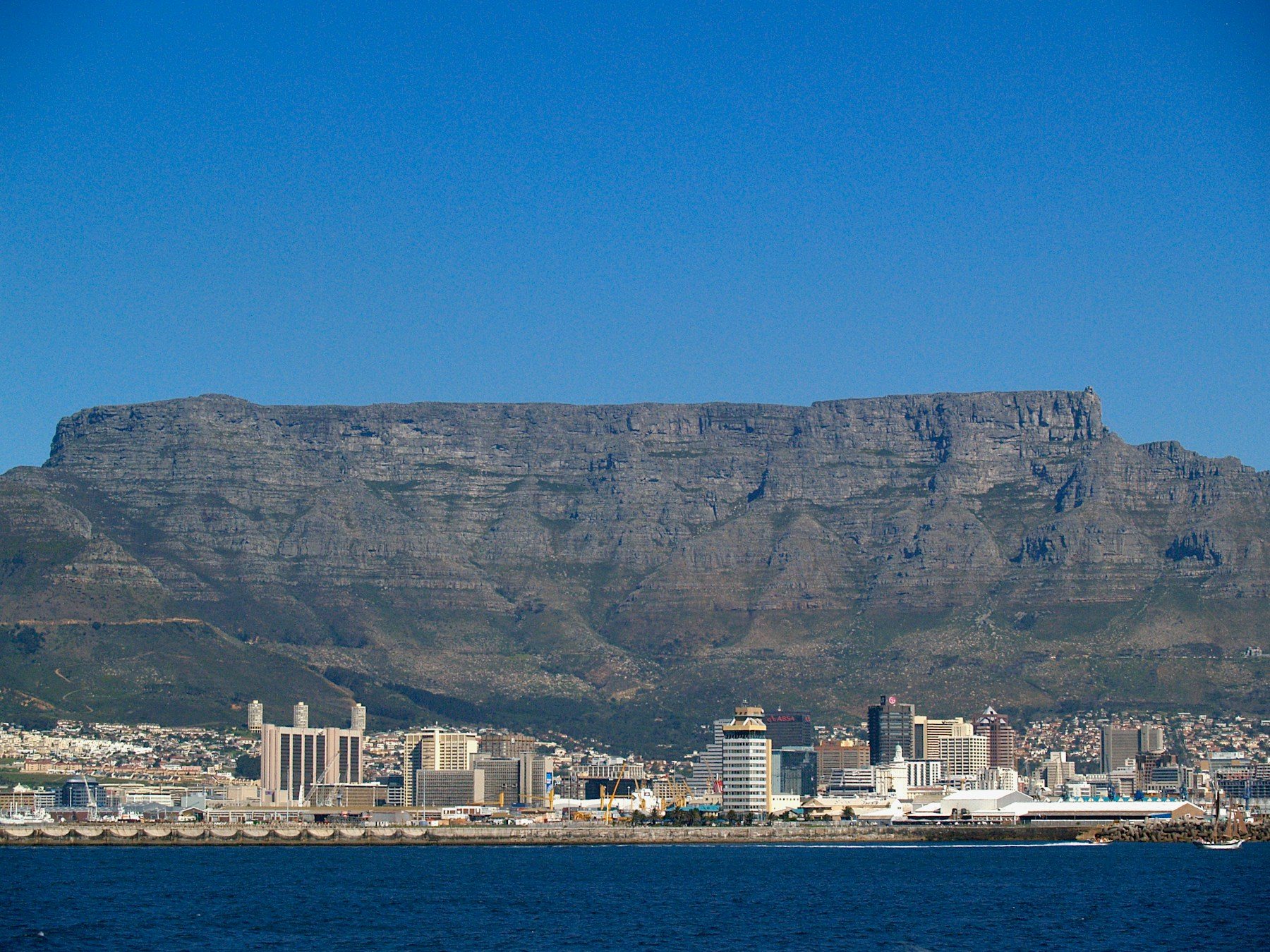
Cape Town is the legislative capital and the main gateway to the south-west. The Cape Peninsula receives most of its rain in winter, and the summers are hot and dry. The surrounding region is also where much of the country's wine is produced and where the Cape Floristic Region's fynbos grows.
It is easy to spend a week here without a car, though renting one makes the peninsula and the wine valleys simpler. Check weather and wind before planning mountain walks, since conditions can change quickly.
Johannesburg is the largest city of the interior and sits at 1,740 meters, so days can be sunny and nights cool. Pretoria, the executive capital, is close by. From here, roads and flights lead to Kruger in the north-east and across the interior to Bloemfontein.
Ask your accommodation about transport and safe areas, and use licensed taxis or ride services, especially at night.
Kruger National Park is large enough that choosing the right area and camp matters. Book accommodation well ahead, and decide whether you want to drive yourself or go with a guided vehicle. Early mornings and late afternoons are usually the best times to see animals. Follow park rules strictly, keep a safe distance and never feed wildlife.
Take sun protection, binoculars and a light jacket, since mornings in the open vehicle can be cool even when the day is hot.
South Africa's history is recent and still shapes daily life. Visit museums and townships with local guides who can speak about their own communities, ask before taking photographs of people and be thoughtful about how you talk about politics and inequality. Tipping is customary in restaurants and for guides, so ask your hosts what is usual. Following local advice is the simplest way to have a safe and respectful trip.
Choose by region.
These are our own suggestions, not official itineraries.
Because seasons differ by region, pack layers. Book park accommodation early, keep to park rules around wildlife and never leave the vehicle where it is not allowed. Take sun protection, and check health advice and any required vaccinations before you travel. Learn a few greetings in local languages, which are always appreciated.
The country is big, so avoid trying to see everything in one trip. A slower, region-based trip is more enjoyable and usually cheaper.
The Mediterranean-type climate of the south-west produces much of the country's wine, and visits to estates are a common part of a Cape Town trip. Barbecue, known as braai, is a social tradition across the country, and trying it with local hosts is one of the best ways to meet people.
Pretoria is the executive capital, Cape Town the legislative capital and Bloemfontein the judicial capital.
In Johannesburg, since 1994.
12.
The South African rand.
19,633 square kilometers.
Mafadi in the Drakensberg, at 3,450 meters.
June to August.
Nine.
Cape Town and Johannesburg have the widest choice of places to stay. Near Kruger and other parks, book ahead in the main season. Compare prices and reviews, and check the cancellation terms before you reserve.
See stays in Cape Town on Booking.com →
Some links on this page are affiliate links. If you book through them, Letsa Atlas may earn a small commission at no extra cost to you.
We checked this guide on November 10, 2026. Entry rules, park fees, prices and transport schedules change, so confirm them with official sources before you go. Confirm details with official sources before you go.
Sources checked November 10, 2026: Wikipedia: South Africa · South African Tourism