The Republic of Ireland covers 70,273 square kilometers and had 5,149,139 people at the 2022 census. The capital and largest city is Dublin. The state includes 26 of the island's 32 counties, Irish and English are both official languages, and the currency is the euro.
Ireland is also the place where the jack-o'-lantern began: in Ireland, lanterns were traditionally carved from turnips, and emigrants to North America later switched to pumpkins. That is the story in our video, and it is rooted in the old festival of Samhain.
For the quick version of this page, see our Ireland travel guide.
Halloween has roots in the Irish festival of Samhain, which marked the end of the harvest season and the start of winter. Lanterns were traditionally carved from turnips and other root vegetables in Ireland and Britain, and when emigrants reached North America, they found pumpkins easier to carve, and the pumpkin became the symbol we know today.
If you visit around 31 October, expect events across the country, from local festivals to larger city celebrations. Book early, since accommodation fills up.
The Republic covers 70,273 square kilometers and ranks 118th in the world by area. The population was 5,149,139 at the 2022 census, with an estimate of 5,458,600 in April 2025. Dublin has over 1.5 million people in its area.
Irish and English are the official languages. Irish is described as the first official language, but English dominates in practice, and you will see Irish on signs and hear it in some western areas.
The Irish Free State became a Dominion on 6 December 1922, and the state was declared a republic in 1949, effective 18 April 1949. The Republic includes 26 of the 32 counties of the island, and the remaining six are in Northern Ireland, which is part of the United Kingdom. Crossing between them is simple, but currency and some rules change, so check before you drive or pay.
The climate is temperate oceanic. Typical temperatures range from a winter minimum of about -5 °C to a summer maximum of about 26 °C, and the record high is 33.3 °C and the record low -19.1 °C. Weather can change within a day, so carry a waterproof jacket in every season.
Summer is the busiest time, with longer days and more events, while spring and autumn are quieter and often cheaper. Winter is dark and wet but good for cities and pubs.
Dublin, Shannon and Cork are the three main international airports. We have not verified current timetables, so check with airlines and operators. In the country, many visitors rent a car, and driving is on the left. Buses and trains connect the main cities, but rural areas are harder to reach without a car.
Roads can be narrow and winding, especially in the west, so allow more time than the map suggests.
Dublin has the widest choice of places to stay. In popular areas on the west coast and in summer, book well ahead. The currency is the euro, and cards are widely accepted. Pubs are social centres, and trying live music in one is a good way to meet people.
Dublin is the capital and the usual start of a trip. It has museums, historic buildings, shops and a large number of pubs, and many sights are close enough to walk between. Spend at least two days here, and consider a day trip by train or bus to the coast or the countryside.
Book popular tours and attractions ahead, especially in summer and around Halloween, when the city is busy.
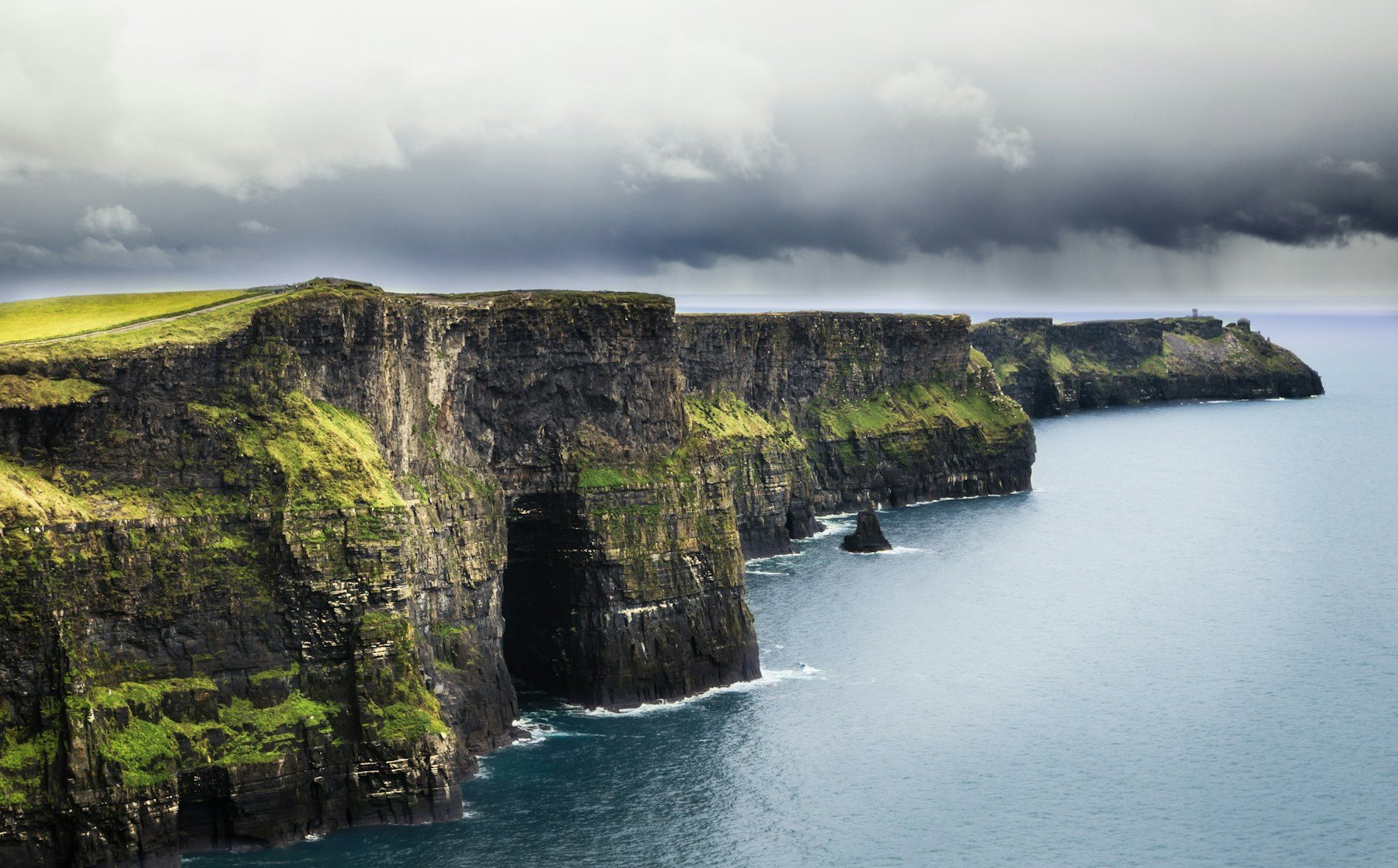
The Atlantic coast is the part of Ireland many visitors imagine: sea cliffs, small villages and open skies, as in the photo at the top of this page. Weather is changeable and winds can be strong, so check the forecast, wear sturdy shoes and stay on marked paths. Distances on narrow roads take longer than they look, so do not plan too much for one day.
The island has two jurisdictions. The Republic includes 26 of the 32 counties, and the other six form Northern Ireland, which is part of the United Kingdom. There are no routine border checks for most travellers, but the currency changes from the euro to the pound sterling, speed limits are shown in different units, and some rules differ, so check before you cross.
Traditional music sessions in pubs are a highlight, and many towns have regular evenings. Irish is the first official language, and while most people speak English day to day, you will see Irish on signs and hear it in some western areas known as the Gaeltacht. Learning a greeting or two is appreciated.
Choose a region and take your time.
These are our own suggestions, not official itineraries.
Irish food is simple and often excellent when the ingredients are local: seafood on the coast, lamb, potatoes, soda bread and dairy. Pubs serve meals as well as drinks, and many have live music in the evening. Tipping is modest, and it is polite to say thank you at the bar and to stay for a round if invited.
Pack layers and a waterproof. Carry a charger for UK-style plugs, and keep an eye on the weather forecast for coastal walks and cliffs. Stay on marked paths near edges, never go close to cliff edges in wind, and follow local signs.
Many sights are free or low cost, but popular attractions can have timed tickets, so check ahead for the dates you plan to travel.
Because summer evenings are long and winter days are short, plan outdoor activities around daylight, and keep a rainy-day alternative for every day of your trip.
Irish people are famously chatty and welcoming. Be friendly in return, and take care with sensitive topics such as politics and history, especially if you cross into Northern Ireland. Respect private farmland, close gates and take your litter with you.
Lanterns were traditionally carved from turnips in Ireland, and emigrants to North America later used pumpkins.
The Irish festival of Samhain.
Dublin.
Irish and English.
The euro.
26 of the island’s 32.
The state was declared a republic in 1949, effective 18 April 1949.
The left.
Dublin has the widest choice of places to stay. Elsewhere, book ahead in summer and around festivals. Compare prices and reviews, and check the cancellation terms before you reserve.
See stays in Dublin on Booking.com →
Some links on this page are affiliate links. If you book through them, Letsa Atlas may earn a small commission at no extra cost to you.
We checked this guide on November 10, 2026. Prices, timetables and opening hours change, so confirm them with official sources before you go. Confirm details with official sources before you go.
Sources checked November 10, 2026: Wikipedia: Republic of Ireland · Ireland.com