A practical guide to the Hawaiian Islands: how the four main tourist islands differ, when the weather, whales and prices are best, what to know about the Big Island volcanoes and how to visit responsibly.
Hawaii is a chain of volcanic islands about 2,000 miles (3,200 kilometers) southwest of the U.S. mainland. It became the 50th state on August 21, 1959, and had about 1.43 million residents in 2025. Eight main islands make up most of the land, and four of them draw most tourists: Oʻahu, Maui, Kauaʻi and the island of Hawaiʻi, known as the Big Island.
If you want one sentence: pick Oʻahu for the city and surf, Maui for beaches and the road to Hana, Kauaʻi for dramatic scenery and hiking, and the Big Island for volcanoes. Weather is warm all year, so timing is mostly about rain, whales, crowds and prices.
The islands were built one by one by a hotspot in the Earth's mantle. The Pacific plate moves over it at about 5 centimeters a year, so each volcano is carried northwest and a new one forms behind it. That is why the oldest main islands are in the northwest, and why only the Big Island is still growing. The whole Hawaiian–Emperor seamount chain runs about 6,200 kilometers across the Pacific floor.
Our 18-second Short about the islands is below. For the quick version of the volcano visit, see our Hawaii travel guide.
The islands are very different, and most trips are better if you stay on one or two rather than hopping all around. The official tourism descriptions and the visitor numbers point to the same four:
| Island | Nickname | Known for | Good fit if you want |
|---|---|---|---|
| Oʻahu | Heart of Hawaiʻi | Honolulu, the state capital, Diamond Head and surf towns such as Haleʻiwa | A city base, beaches and the most flights |
| Maui | Valley Isle | Famous beaches, the peak of Haleakalā and the Hana coastline | Beaches, scenic drives and quaint towns and farms |
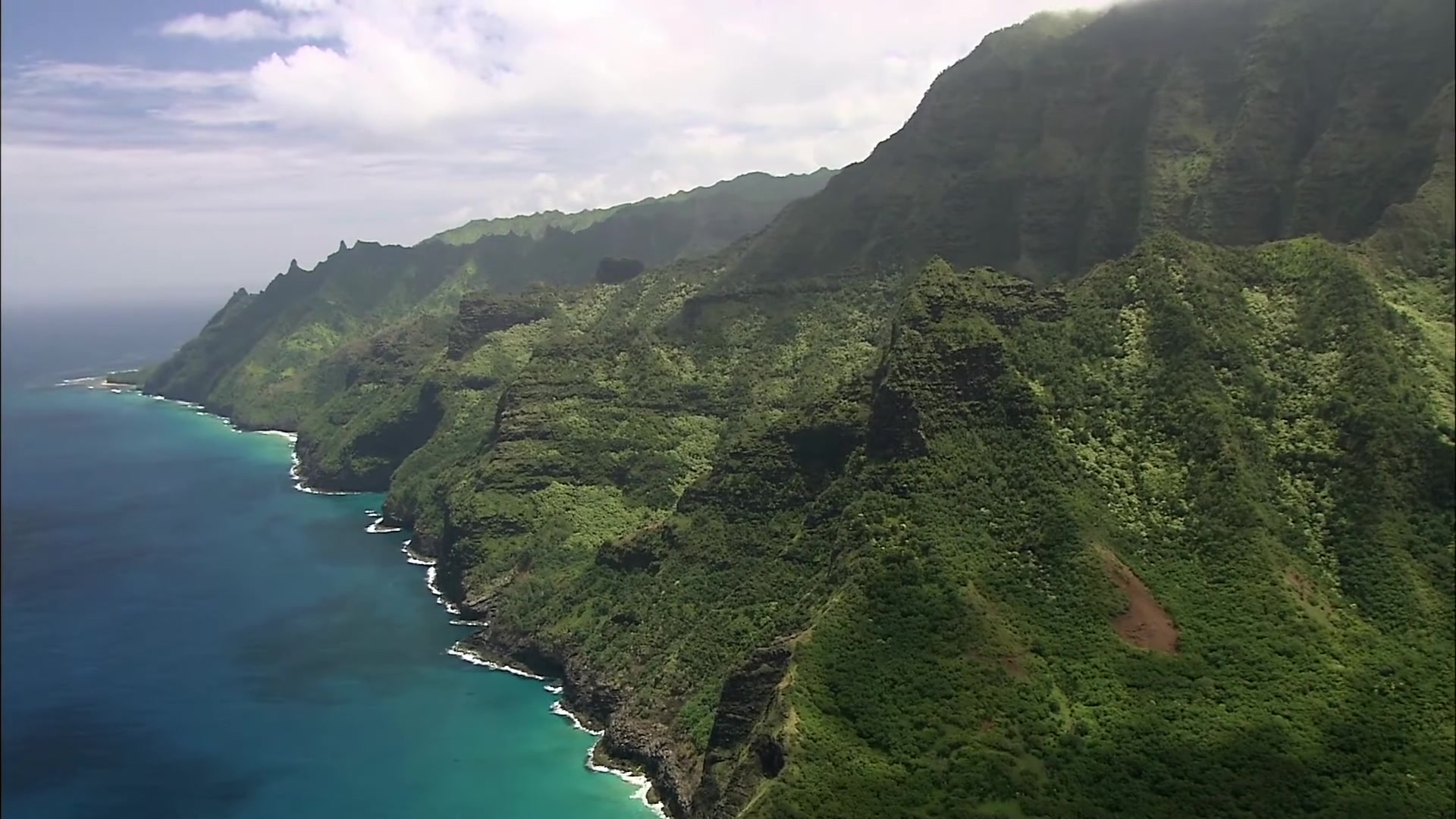
| Kauaʻi | Garden Isle | Dramatic scenery, including the Nāpali Coast | Hiking, green landscapes and quiet |
| Hawaiʻi (Big Island) | The youngest and largest island | Active volcanoes, coffee farms, beaches and Akaka Falls | Volcanoes, adventure and variety |
Molokaʻi and Lānaʻi are the quieter options. Molokaʻi is described as having rustic charm, and Lānaʻi balances restful luxury with rugged terrain. Summing the 2018 visitor figures, Oʻahu drew by far the most visitors, followed by Maui, the Big Island and Kauaʻi, so the more crowded islands are the first two.
Temperatures change little. Summer highs reach about 31 °C and winter daytime temperatures are around 28 °C, and near-constant trade winds from the east moderate heat and humidity. The seasons are about rain and swell, not temperature.
| Season | Weather | Good for | Watch for |
|---|---|---|---|
| Dry season, roughly May to October | Warm, lower humidity and little rain | Beaches, swimming, snorkeling and outdoor activities | Summer (June to August) has the highest airfares and room rates |
| Wet season, roughly November to March | Warm, with more rain, especially on windward sides, often in short bursts | Big-wave surfing on the North Shore of Oʻahu and whale watching | The winter holiday period (December to January) is expensive |
| Spring and fall | Mild and mixed | Manageable crowds and better availability | September to November has reduced crowds and a warm ocean |
Sources disagree slightly on the exact months of the dry and wet seasons, which is normal because the pattern differs by island and by coast. Treat the months above as rough guides, and expect the windward sides of islands to be rainier and the leeward sides drier.
Whales. Humpback whales migrate to Hawaiian waters each winter to bear and nurse their calves and to mate, and they do not feed there. Almost two-thirds of the North Pacific humpbacks winter around Hawaii, and the Hawaiian Islands Humpback Whale National Marine Sanctuary, about 1,400 square miles, protects their habitat. Whale watching is most productive from December through April, with the best sightings in January and February.
Hurricanes. Hurricane season runs from June to November, with the highest risk from August to October. Hurricanes are rare, but check the forecast before you travel.
All the active land volcanoes in Hawaii are on the southern half of the Big Island. Kīlauea is one of the most active volcanoes in the world. Its name is said to mean "much spreading," and it is traditionally considered the sacred home of the volcano goddess Pele. Mauna Loa, the world's largest shield volcano at 4,169 meters, erupted in 2022 after 40 years of inactivity.
Hawaiʻi Volcanoes National Park covers about 1,434 square kilometers and was designated a World Heritage Site in 1987. Kīlauea's summit crater, Halemaʻumaʻu, has erupted intermittently since December 2020, and the park has closed areas before: in May 2018, explosions, toxic ash clouds, earthquakes and road damage closed the summit area until September that year. Visit the park's and the USGS Hawaiian Volcano Observatory's pages on the day of your visit.
Entry fees and passes change, so check the park's official page before you go. Mauna Kea, the tallest peak at 4,205 meters above sea level, is a sacred mountain to Native Hawaiians, so treat it and its trails with respect.
Hawaii has lost a higher share of its native species than any other U.S. state, and it has more endangered species than any other state. About 32 living bird species are found only in Hawaii. Tourism is the state's largest industry, and it has a real effect on the islands. Tourism accounts for about 44.7 percent of the state's water consumption and about 60 percent of its energy and fuel use, according to one summary of the figures. Trail erosion, coral damaged by people standing on or kicking reefs, and marine animals disturbed by visitors are all cited as tourism-related harms.
This is our own suggestion, based on the island facts above, not an official itinerary.
Inter-island flights take time and add cost, so most visitors are better off with two islands than four. In winter, add a whale-watching morning, and keep a buffer for volcanic air-quality or road closures if the volcano is on your list.
Oʻahu is the most visited island and has Honolulu, Diamond Head and the North Shore. Maui suits beaches and scenic drives, Kauaʻi suits hiking and dramatic scenery, and the Big Island suits volcanoes.
Temperatures stay warm all year. The drier months, roughly May to October, suit beaches and outdoor activities, and fall and spring are quieter. Winter is the time for whales and big-wave surfing on the North Shore.
Humpback whales are in Hawaiian waters each winter. Whale watching is most productive from December through April, with peak sightings in January and February.
It can be. Airfares and room rates are highest in summer, from June to August, and during the winter holidays, in December and January. Spring and fall shoulder seasons usually have lower rates.
Kīlauea has erupted intermittently inside Halemaʻumaʻu crater since December 2020, but access and activity change. Check the national park and the USGS Hawaiian Volcano Observatory on the day.
Stay on marked trails and behind barriers, obey closures and check air quality, because volcanic gas can be dangerous for sensitive groups such as children, pregnant visitors and people with heart or lung conditions.
Hurricane season runs from June to November, with the highest risk from August to October. Hurricanes are rare, but it is worth checking forecasts and travel insurance terms.
On the Big Island and for Hana, Haleakalā and the Kauaʻi coast, a car is the easiest option. There is no shuttle inside Hawaiʻi Volcanoes National Park, so most visitors drive.
The Big Island is the best base for the volcanoes. Compare prices and reviews, and check the cancellation terms before you reserve.
See stays on Hawaii's Big Island on Booking.com →
Some links on this page are affiliate links. If you book through them, Letsa Atlas may earn a small commission at no extra cost to you.
We checked this guide on November 8, 2026. Volcanic activity, park rules, closures, prices and weather change often, and sightings of whales and wildlife are never guaranteed. Confirm details with official sources before you go.
Sources checked November 8, 2026: Wikipedia: Hawaii · Wikipedia: Hawaii Volcanoes National Park · Wikipedia: Tourism in Hawaii · Wikipedia: Hawaiian Islands Humpback Whale National Marine Sanctuary · Hawaiʻi Tourism Authority: Islands · This Week Hawaii: Best time to visit