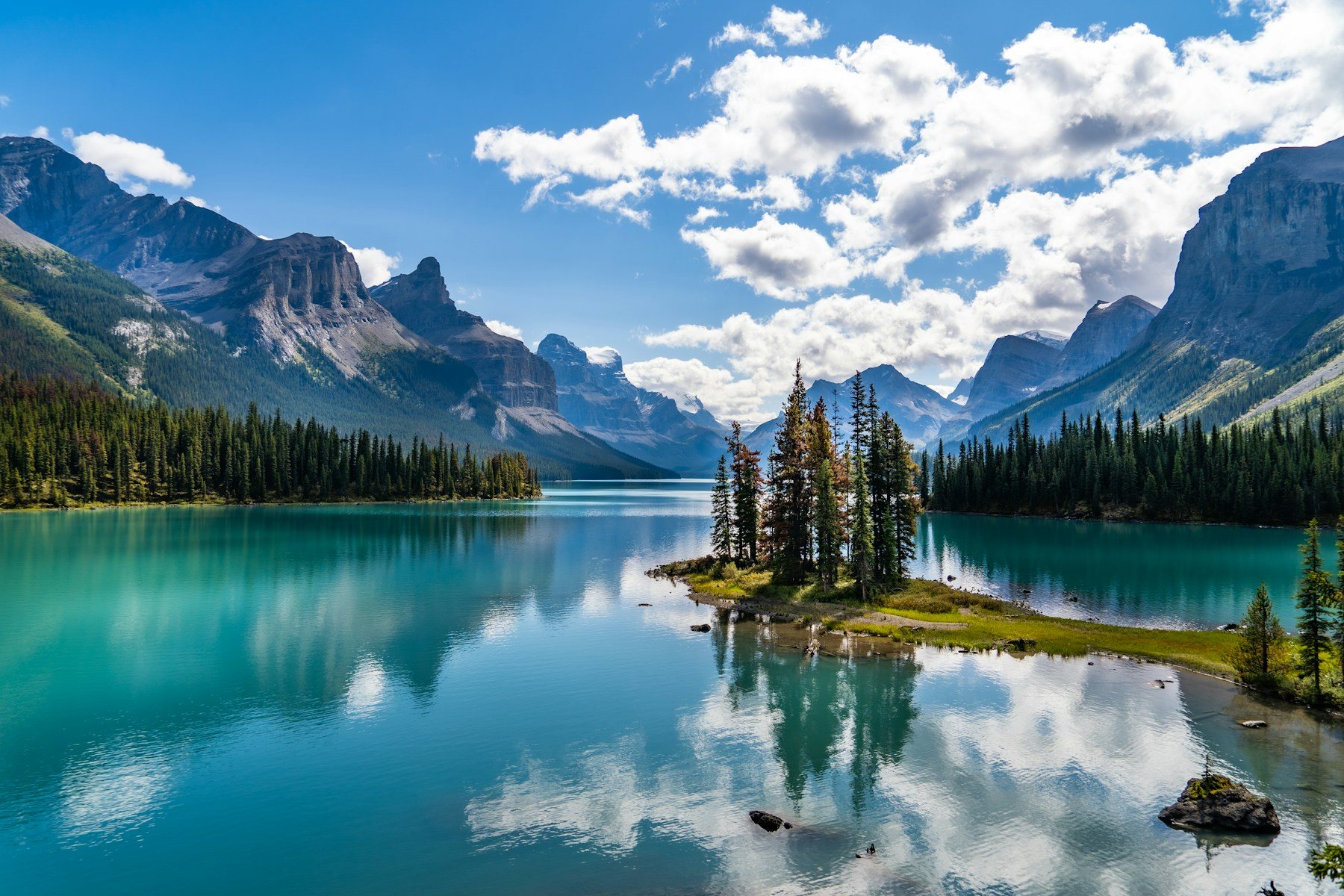
The country with the most lakes
Canada covers 9,984,670 km², the second-largest country in the world. It has over 2,000,000 lakes, 563 of which are larger than 100 km², and the world’s largest area of fresh water lakes. Its coastline, at 243,042 km, is the longest of any country.
The capital is Ottawa and the largest city is Toronto. Canada has 10 provinces and 3 territories, English and French are official languages, and the currency is the Canadian dollar. The 2021 census counted 36,991,981 people, and the 2026 estimate is about 41.8 million.
The Great Lakes feed the St. Lawrence River, where much of Canada’s economic output is concentrated. Banff, established in 1885, is the country’s first national park, and Algonquin, from 1893, is the oldest provincial park.
For a visit, scale is the main planning fact. Choose one or two regions, such as the Rockies in the west or Toronto, Ottawa and Montreal in the east, and fly between them rather than driving across the country. Popular parks fill up in summer, with limited parking and sometimes advance reservations, and mountain and coastal weather changes quickly, so carry layers in every season. English and French are official, and a bilingual greeting is appreciated, especially in Quebec. Tipping 15 to 20 percent is customary in restaurants, and cards are accepted almost everywhere in cities.
Climate differs widely. Winters are harsh in the interior and Prairie provinces, where temperatures can fall below -40 °C, while coastal British Columbia has mild, rainy winters. The country spans several time zones, from UTC-3.5 to UTC-7.
From our Letsa Atlas Short · Watch on YouTube