Travel › Yemen › Socotra
Letsa Travel · Yemen

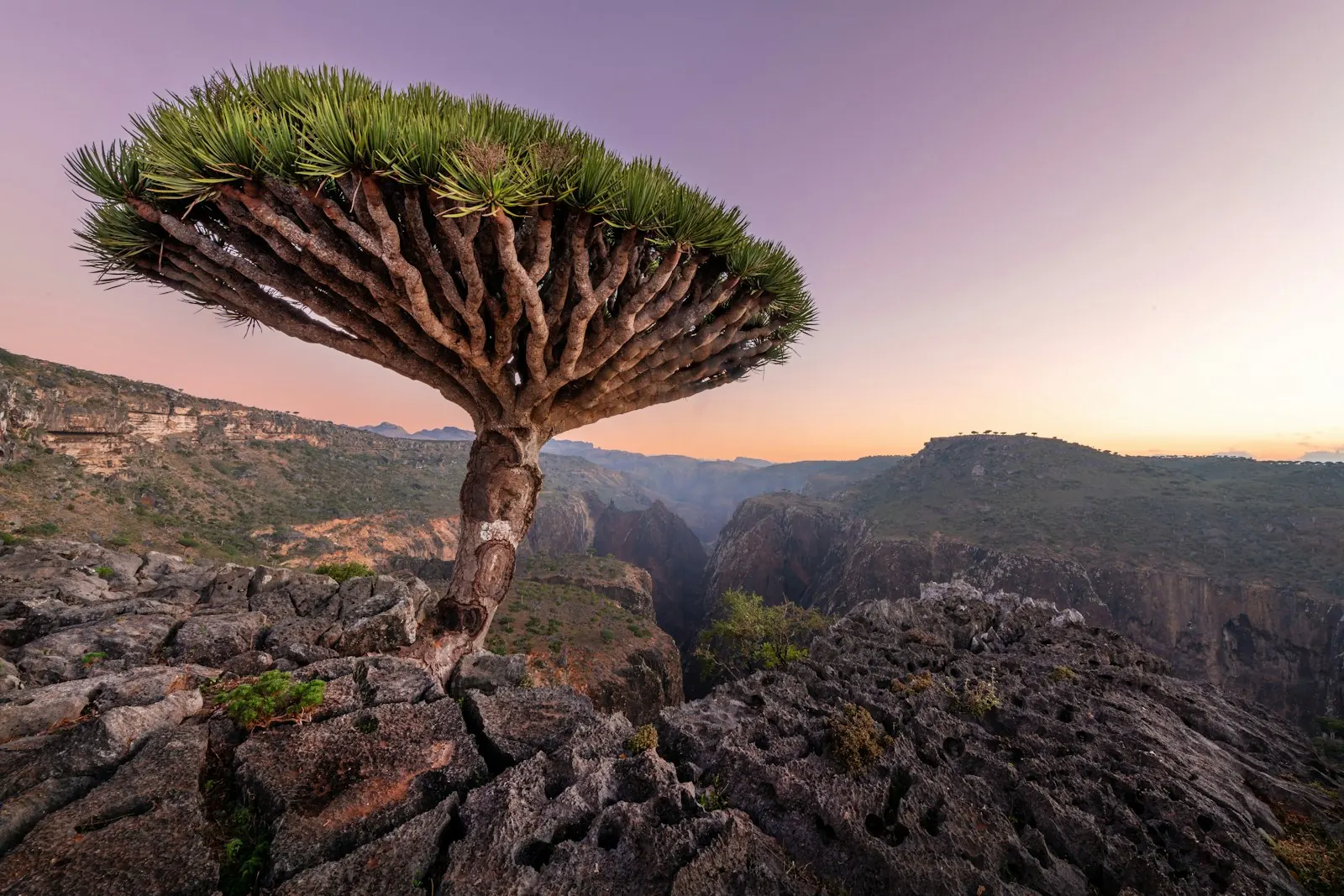
Socotra: dragon blood trees at a hard-to-reach island

A strange, beautiful island with plants found nowhere else, and a serious security warning.

Know before you go

Socotra at a glance

Local time…
Weather now · Hadibu…
Exchange rate…
CurrencyYemeni rial (YER)
LanguageArabic, and Soqotri on the island
DrivingOn the right
Best timeOctober to April, monsoon winds from June to September disrupt access

Check official travel advice. Government advisories for this destination can be strict. Read your government's current advice before you plan anything.

Facts last checked in November 2026. Entry rules, prices and conditions change, so confirm visas and safety details with the official government sources before you travel. Weather: MET Norway. Exchange rates: ExchangeRate-API.

The story

An island out of another era

Socotra lies in the Arabian Sea and belongs to Yemen. Its dragon blood tree is named for the dark red sap that oozes from its bark, and a travel guide lists it as found only on the island.

Please read the warning below first. Many governments advise against all travel to Yemen, and that includes Socotra.

1commercial airport on the island
Oct to Aprbest months for nature visits, per Wikivoyage

From our Letsa Atlas Short · Watch on YouTube

Practical guide

Plan your Socotra trip

Check before you go: the U.S. government advises against all travel to Socotra because it cannot give consular help there, and many other governments advise against all travel to Yemen. We are not recommending a trip. Check your own government's advice and your insurance first.

Getting there

  • Commercial flights resumed in 2018, and local authorities issue visas.
  • The listed routes are Yemenia from Cairo and Felix Airlines from Dubai. Socotra Airport is the only commercial airport.

Safety and security

  • Wikivoyage warns that operators often misrepresent the security situation.
  • Do not photograph military installations, equipment or the airport.
  • Follow instructions at armed checkpoints and never ask a driver to speed toward one, since this risks long detention.

Best time

  • Nature visits: early October to late April. Wildlife: late January to May.
  • The monsoon runs roughly July to mid-August, and sources give conflicting windows.

What people come to see

  • The dragon blood tree and other endemic plants such as the desert rose and the cucumber tree.
  • Beaches such as Shouab, Qalansia and Arher, and Hoq Cave.
  • Hiking, snorkeling and bird watching.

Staying and getting around

  • Hotels in Hadibo are basic. Camping on beaches is the most popular option.
  • Apart from a public bus from the airport to Hadibo and on to Qalansia, you need a car with a driver.

Health

  • Hospital care is limited.
  • The CDC recommends up-to-date polio and measles vaccines and advises rabies vaccination. Malaria prophylaxis is suggested though malaria is not common.

Details come from Wikivoyage, which may lag behind current events. Security conditions can change quickly. We checked on November 1, 2026. Entry rules, fees and prices change, so confirm them with official sources before you reserve.

Want the full picture? Read our complete Socotra travel guide: Dragon blood trees, safety warnings, best season and access.
Where to stay

Where to stay

Hadibo is the usual base. Wikivoyage lists several simple hotels there, a hotel at the airport and a few guesthouses around the island, and says beach camping is the most popular option. Camping packages can include a driver or guide and meals. Wikivoyage gives phone numbers for hotels but no online booking, so we do not link a booking site here. Check the cancellation terms before you pay, and check your own government’s travel advice first.

Sources checked November 1, 2026: Wikivoyage (Socotra) · U.S. State Department travel advisories