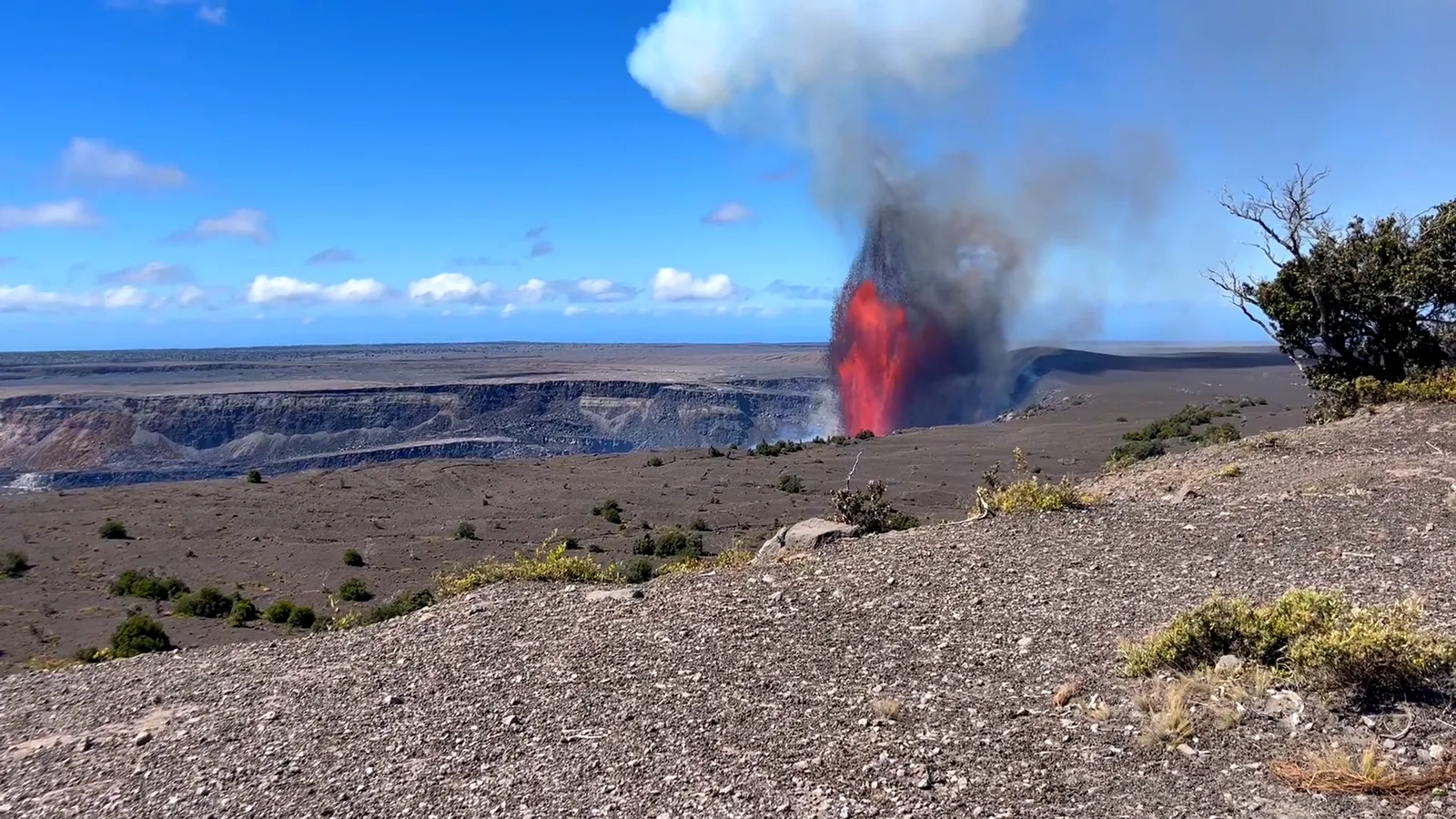
The eruption since December 2024
Kīlauea is one of the most active volcanoes on Earth. The current summit eruption began on December 23, 2024 inside Halemaʻumaʻu, the crater at the heart of Kīlauea caldera. Since then it has followed a pattern of separate episodes: lava fountains for a few hours, sometimes up to half a day, followed by a pause while the summit inflates again. Episode 57, on November 23, 2026, sent fountains about 200 meters high from the north vent and a gas plume several kilometers into the sky. The USGS expects more episodes in the coming weeks, but no one can promise an exact day.
Before you plan around an episode, check the USGS Kīlauea page for the latest update and any forecast window, and the live summit webcams. Our Live Views page collects live cameras from places in our guides.
Where to watch the lava
- Uēkahuna Bluff: the high point on the northwest rim of the caldera, with a wide view across to Halemaʻumaʻu. Popular at night, so arrive early.
- Kīlauea Overlook: a short walk from Uēkahuna along the rim, often a little less crowded.
- Keanakākoʻi Overlook: on the south side of the caldera, reached on foot along a closed section of Crater Rim Drive.
- Volcano House: the hotel on the caldera rim near the visitor center, with views from its restaurant and lawn.
Viewpoints open and close with the eruption, gas levels and wind, so check the NPS website on the day.
What else to see in the park
- Kīlauea Iki trail: a hike down across a solidified lava lake from 1959.
- Nāhuku (Thurston Lava Tube): a walk through a lit lava tube in the rainforest.
- Steam vents and Sulphur Banks: short boardwalks near the visitor center.
- Chain of Craters Road: a drive of about 30 km down to the ocean, past craters and old lava flows, ending at the Hōlei Sea Arch.
When to go
The park is open all year and 24 hours a day. Lava episodes do not follow the seasons, so the best plan is to keep a few flexible days and follow the USGS forecast. The glow is most impressive after dark and before dawn. The summit is about 1,200 meters high, cooler and wetter than the coast, so bring a warm layer and rain gear.
Getting there
Hilo International Airport (ITO) is the closest, about 45 minutes by car along Highway 11. From Kona International Airport (KOA) it is around 2 to 2.5 hours. Rent a car or join a tour; public transport to the park is very limited. The park charges an entrance fee per vehicle or per person, and US national park passes are accepted; check current prices on the NPS website.
Safety
- Volcanic gas (vog): sulfur dioxide can irritate lungs; people with asthma or heart problems, pregnant visitors and small children should take extra care.
- Tephra and Pele's hair: fine volcanic glass can fall downwind of tall fountains. Keep to open viewpoints and follow closures.
- Stay on trails: cracks and steep cliffs line the caldera rim. Never cross closure signs.
- Night viewing: bring a red-light torch, warm clothes and water.
Local tips
- Download the NPS app and offline maps; mobile signal can be weak.
- Fill up on fuel and food in Hilo or Volcano Village.
- Respect the area: Halemaʻumaʻu is sacred to Native Hawaiians as the home of Pele, the goddess of volcanoes. Do not take rocks or leave offerings that are not yours.
A 2-day plan
This is our own suggestion, not an official itinerary.
- Day 1: arrive via Hilo, stop at the visitor center, walk the steam vents and Sulphur Banks, then watch the caldera at sunset and after dark from Uēkahuna or Kīlauea Overlook.
- Day 2: hike Kīlauea Iki in the morning, walk through Nāhuku, then drive Chain of Craters Road to the sea arch. Return to the rim for the glow if an episode is under way.
Frequently asked questions
Where is Kīlauea?
Kīlauea is an active volcano on the southeast side of Hawaiʻi Island (the Big Island), inside Hawaiʻi Volcanoes National Park. The current eruption is inside Halemaʻumaʻu crater at the summit caldera, about 45 km southwest of Hilo.
Is Kīlauea erupting right now?
The summit eruption that began on December 23, 2024 is still going on as a series of lava fountain episodes. Episode 57 happened on November 23, 2026. Between episodes the volcano pauses for days or weeks, so check the USGS Hawaiian Volcano Observatory updates before you go.
How high are the lava fountains?
Episode 57 reached about 200 meters (650 feet). The tallest fountains of this eruption reached about 450 meters (around 1,500 feet), higher than the roof of the Empire State Building.
Can scientists predict the next episode?
Not exactly, but they come close. Tiltmeters show the summit swelling as magma refills it, and the USGS publishes a likely time window for the next episode when the pattern is clear. Episodes can still start earlier or later than forecast.
Where can I watch the lava?
From viewpoints on the rim of Kīlauea caldera inside Hawaiʻi Volcanoes National Park, such as Uēkahuna Bluff and Kīlauea Overlook. The fountains are inside a closed area, so you watch from a distance; stay on marked trails and follow ranger instructions.
Is the park open at night?
Yes. Hawaiʻi Volcanoes National Park is open 24 hours a day, and the lava glow is most dramatic after dark. Some roads or viewpoints can close during high gas levels or ash and tephra fall.
Is it safe to visit during an eruption?
Viewing areas are chosen to be safe, but volcanic gas (vog), falling tephra and volcanic glass fibres (Pele's hair) can be a hazard, especially for people with breathing or heart conditions, small children and pregnant visitors. Check NPS alerts on the day.
How do I get to Kīlauea?
Fly into Hilo (ITO), about 45 minutes by car, or Kona (KOA), about 2 to 2.5 hours away. You need a car or a tour, as public transport to the park is very limited.
Do I need to pay to enter the park?
Yes, Hawaiʻi Volcanoes National Park charges an entrance fee per vehicle or per person, and US national park passes are accepted. Check the official NPS website for current prices.
Where should I stay?
Volcano Village, just outside the park entrance, is the closest base, with lodges, cabins and B&Bs. Volcano House inside the park sits on the caldera rim. Hilo has the widest choice of hotels.