The five lakes
Lake Superior is the largest and coldest, and by surface area the biggest freshwater lake in the world. Lake Michigan is the only one entirely in the United States, with Chicago and Milwaukee on its shores. Lake Huron is known for its islands and clear water, Lake Erie is the shallowest and warmest, and Lake Ontario sits at the bottom of the chain, below Niagara Falls, before the water flows out through the St. Lawrence River to the Atlantic.
How lake-effect snow works
Lake-effect snow needs cold air over warmer water. When Arctic air blows across an unfrozen lake, the bottom of the air mass warms and fills with moisture. It rises, cools and drops that moisture as snow, usually in narrow bands that can bring heavy snow to one town while the next stays almost clear. The longer the wind travels over open water, the heavier the snow tends to be.
That is why the downwind shores, often to the south and east of the lakes, get the most. Areas around Buffalo and the Tug Hill Plateau in New York, western Michigan and Michigan's Upper Peninsula are known as snow belts. Once a lake freezes over, the effect usually fades.
When to go
Summer, roughly June to early September, is the best time for beaches, kayaking and the national lakeshores. September and October bring fall colours along the shores. November to January is lake-effect season, beautiful but unpredictable on the roads. In the coldest months, frozen waterfalls and ice formations along the shores draw winter photographers.
Niagara Falls
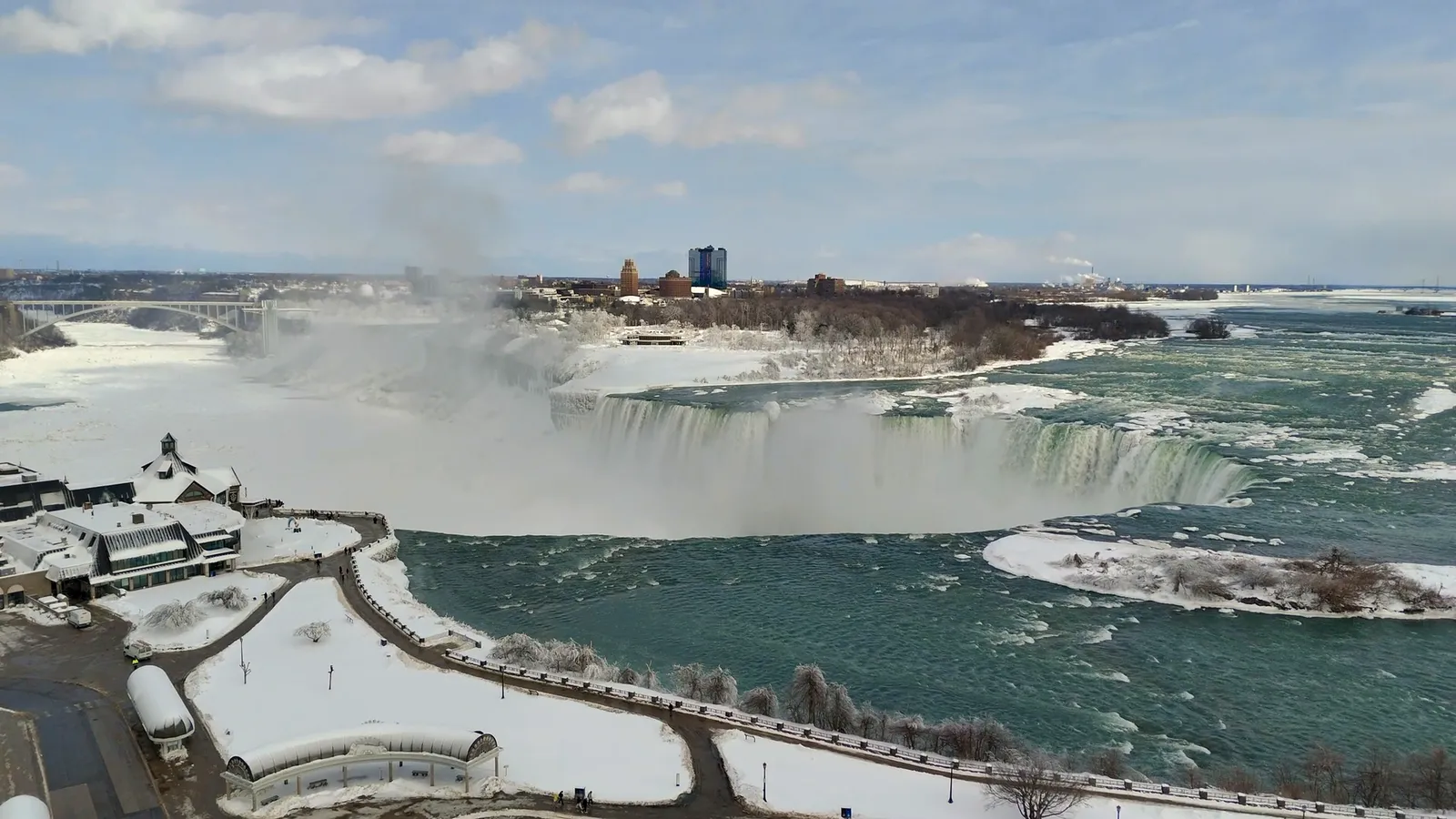
The Niagara River carries water from Lake Erie to Lake Ontario and drops over Niagara Falls on the US–Canada border. You can see the falls from both sides: the American side has Niagara Falls State Park, while the Canadian side faces the Horseshoe Falls. Boat tours run close to the falls in the warmer months; in winter, mist freezes on the trees and railings around the gorge.
Michigan's lakeshores
Two of the three US national lakeshores on the Great Lakes are in Michigan. Sleeping Bear Dunes, on Lake Michigan near Traverse City, has dunes that rise about 450 feet above the water and around 35 miles of shoreline. Pictured Rocks, on Lake Superior near Munising, is known for colourful sandstone cliffs best seen from a boat or kayak. Mackinac Island, between Lake Michigan and Lake Huron, bans most cars, so visitors get around by bike, on foot or by horse-drawn carriage. The third national lakeshore, the Apostle Islands, is on Lake Superior in Wisconsin.
Lakeside cities
Chicago sits on Lake Michigan, with beaches and a lakefront trail right next to the skyline. Toronto faces Lake Ontario, with ferries to the Toronto Islands. Cleveland is on Lake Erie, Duluth on Lake Superior, and Buffalo on the eastern end of Lake Erie, close to Niagara Falls.
Crossing the border
Four of the five lakes are shared by the USA and Canada, and many trips cross the border at Niagara Falls, Detroit–Windsor or Sault Ste. Marie. Bring a passport or another accepted document. Depending on your nationality, you may need a US ESTA or visa and a Canadian eTA or visa, and rules for rental cars crossing the border vary by company. Check the official requirements before you travel.
Winter driving tips
- Check forecasts and road reports: lake-effect bands can turn a clear road into whiteout conditions within minutes.
- Carry winter gear: a scraper, warm clothes, water and a charged phone are worth having in the car.
- Leave time: highways near the snow belts sometimes close during storms, especially around Thanksgiving travel.
- Respect beach warnings in summer: waves and rip currents on the lakes can be dangerous.
A 5-day plan
This is our own suggestion, not an official itinerary.
- Day 1: Niagara Falls from the US and Canadian sides.
- Day 2: drive along Lake Erie towards Detroit, or spend the day in Toronto.
- Day 3: head north to Mackinac Island and cycle around the island.
- Day 4: Pictured Rocks by boat or kayak, or Sleeping Bear Dunes in summer.
- Day 5: finish in Chicago on Lake Michigan.
Frequently asked questions
What are the five Great Lakes?
Lake Superior, Lake Michigan, Lake Huron, Lake Erie and Lake Ontario. Lake Michigan lies entirely in the United States; the other four are shared by the USA and Canada.
How much fresh water do the Great Lakes hold?
Together they hold about 21% of the world's fresh surface water and about 84% of North America's, according to the US Environmental Protection Agency. That is almost as much as Lake Baikal in Russia holds on its own.
What is lake-effect snow?
When very cold air, usually from the Arctic, blows across the warmer open water of the lakes, it picks up heat and moisture. The moisture freezes and falls as narrow, intense bands of snow on the downwind shores, often to the south and east of the lakes.
When does lake-effect snow happen?
It is most common from about November to January, when the air is already cold but the lakes are still relatively warm and mostly free of ice. It usually fades once a lake freezes over.
Where does lake-effect snow hit hardest?
The downwind shores of the lakes, so-called snow belts. Areas around Buffalo and the Tug Hill Plateau in New York, western Michigan and Michigan's Upper Peninsula are known for it. In November 2022, parts of the Buffalo area got more than 50 inches of snow in a few days.
Which is the biggest Great Lake?
Lake Superior. By surface area it is the largest freshwater lake in the world.
What is the best time to visit the Great Lakes?
Summer, roughly June to early September, is best for beaches, boat trips and the national lakeshores. Autumn brings fall colours. Winter is for snow, ice formations and frozen waterfalls, but roads can close during lake-effect storms.
Can I visit both the US and Canadian sides?
Yes, many trips cross the border, for example at Niagara Falls. You need a passport or another accepted travel document, and depending on your nationality you may need a US ESTA or visa and a Canadian eTA or visa. Check the official requirements before you go.
What are the best places to visit around the Great Lakes?
Popular choices include Niagara Falls, Chicago on Lake Michigan, Sleeping Bear Dunes and Pictured Rocks in Michigan, Mackinac Island, the Apostle Islands in Wisconsin, and Toronto on Lake Ontario.
Can you swim in the Great Lakes?
Yes, in summer many beaches are popular for swimming. Watch for rip currents and check local beach warnings and water quality notices, as the lakes can be dangerous in waves and wind.