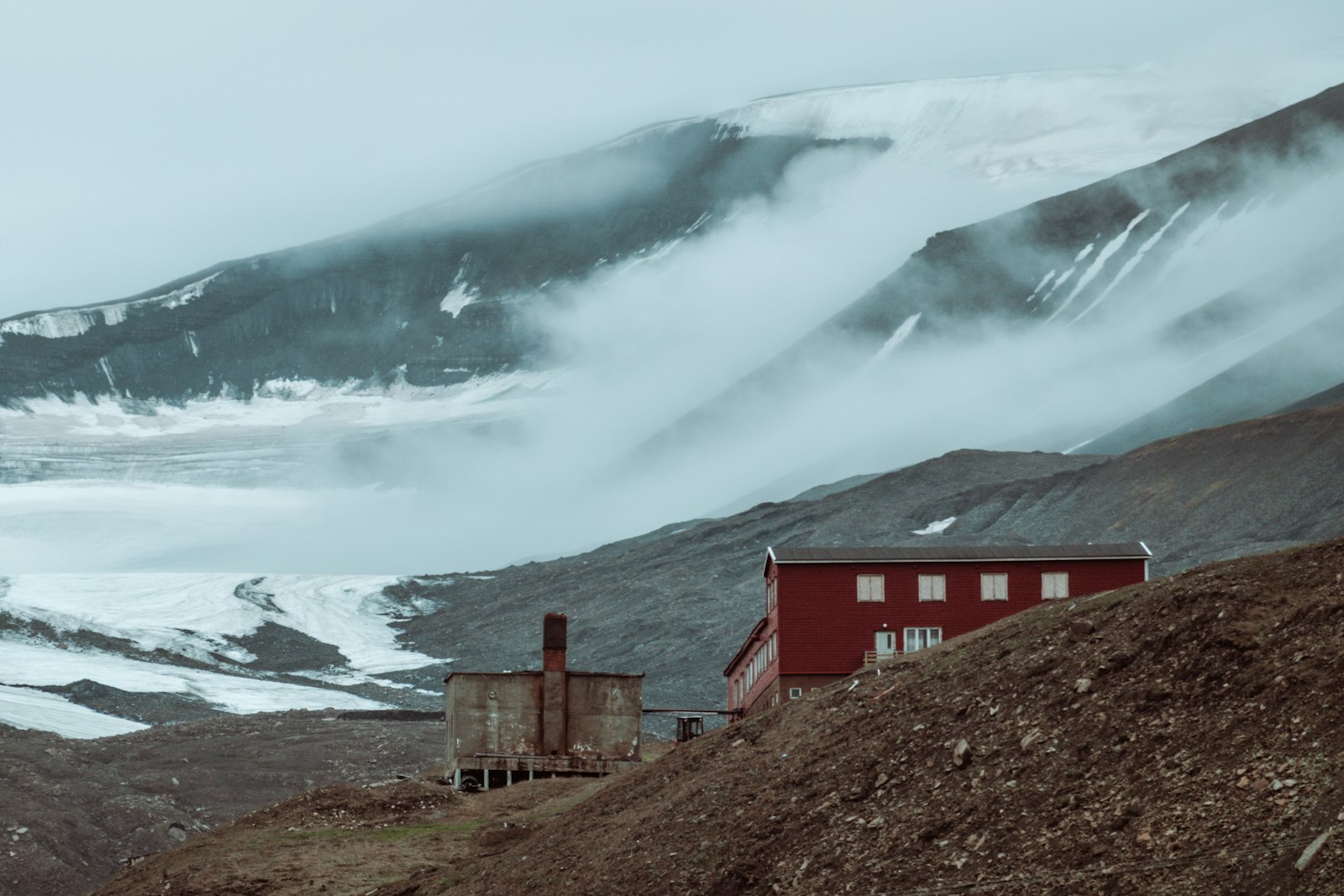
A practical guide to Svalbard, the Norwegian Arctic archipelago: the polar night and midnight sun, the best season for what you want to do, polar bear safety, tours from Longyearbyen and how to get there.
Svalbard is an Arctic archipelago between mainland Norway and the North Pole, with a total area of about 62,000 square kilometers, of which glaciers cover about 60 percent. Around 2,900 people live there, most of them in Longyearbyen, the administrative center, at 78°13′N. The highest peak, Newtontoppen, rises 1,717 meters.
Svalbard is governed under the Svalbard Treaty, signed on 9 February 1920, which gave Norway full sovereignty. No visa or residence permit is needed to live or work there, but if you need a Schengen visa for mainland Norway, you must have it when traveling there. Most visitors fly into Longyearbyen and base themselves in town.
Our 18-second Short about Svalbard is below. For the quick version, see our Svalbard travel guide.
Svalbard's seasons are defined by light more than by temperature. Visit Svalbard describes three tourism seasons, and the polar night sits inside the winter one.
| Season | Dates | What it is like | Good for |
|---|---|---|---|
| Polar summer | 17 May to 30 September | Midnight sun, flowers and strong contrasts. Longyearbyen's midnight sun runs about 20 April to 23 August. | Boat trips, cruises, hiking and kayaking |
| Northern lights winter | 1 October to 28 February | The last sun of the year appears in late October. The polar night in Longyearbyen runs about 26 October to 15 February. | Northern lights tours, dog sledding, snowmobile tours and ice caves |
| Sun winter | 1 March to 16 May | Daylight returns, and activity rises. Because of the mountains, the sun does not reach the town until around 8 March. | Snowmobiling, ski tours and winter landscapes with light |
Sources differ by a day or two on the exact polar night and midnight sun dates, because it depends on how you count and on the mountains around town. Temperatures are cold even in summer: the 1991 to 2020 daily mean was 4 to 7 °C in summer and between -13 and -9 °C in January. Wind makes it feel colder.
Which season is best depends on what you want. For the midnight sun and boat trips, go in summer. For the northern lights and the polar night, go between October and February, with the dark months from October to January dominated by the lights according to Visit Svalbard. For snow plus light, March to May is the high season for fly-and-stay visitors.
In Longyearbyen the polar night lasts about 111 days, from 26 or 27 October to 15 February, with the sky not fully dark: civil polar night runs from 13 November to 29 January, which means there is a faint twilight at midday. The sun is then hidden by the mountains until around 8 March, when the town celebrates Solfestuka, the Sun Festival Week.
Further north, the light cycle is even more extreme. At 74°N the midnight sun lasts 99 days and the polar night 84 days, while at 81°N the figures are 141 and 128 days. In summer, you can walk outside at any hour in daylight, which makes it easy to lose track of time.
Polar bears are protected. Estimates vary by source: a count of around 300 resident bears as of 2021, a shared population of about 2,650 bears with Franz Josef Land, and Visit Svalbard says about 3,000 in the Svalbard area. The important point is that you can meet a polar bear anywhere on Svalbard, all year round.
Human traces from before 1946 are automatically protected, so do not touch or remove old objects.
Visit Svalbard lists a wide range of activities, nearly all of them guided:
A popular fact says that it is illegal to die in Svalbard. It is a simplification. Burials are not allowed in Longyearbyen, a ban dating to 1950, after it was found that bodies from the 1918 flu pandemic had not decomposed in the permafrost, and scientists worry they might still carry the live virus. The old cemetery was used until 1950 and holds 44 people. Since then, bodies have been sent to the mainland for burial, and ashes can be buried with the government's permission. The claim is a vivid way to describe the rule, but it is not literally a law against dying.
Svalbard Airport, Longyear, opened in 1975 and is the only airport on the archipelago that serves flights off it. Scandinavian Airlines flies daily to Oslo and Tromsø, and Norwegian Air Shuttle flies Oslo to Svalbard several times a week. Svalbard has no border controls of its own, but because the flights start in Norway, you pass Norwegian immigration first, and Svalbard is not in the Schengen area.
You do not need a car in Longyearbyen, and there is almost no infrastructure outside it. Snowmobiles are common in winter and boats run in summer. Since February 2024, ships are limited to 200 passengers in protected areas, with 43 defined landing spots, which affects cruise itineraries. Tourism is one of Svalbard's main industries, and about 40,000 tourists flew in during 2008.
This is our own suggestion, not an official itinerary.
Book the activities you want through the activity planner or an activity provider before you arrive. In Longyearbyen, take off your shoes in most buildings, including some hotels and shops.
It depends on what you want. Summer, from mid-May to the end of September, has the midnight sun and boat trips. October to February has the polar night and northern lights, and March to May has snow with returning daylight.
In Longyearbyen it runs from about 26 October to 15 February, roughly 111 days. The sun is hidden behind the mountains until around 8 March.
Visit Svalbard describes October to February as the northern lights winter, with the dark months from October to January dominated by the lights. They are never guaranteed.
Polar bears can be met anywhere on Svalbard all year round. Visit Svalbard advises always going on an organized excursion with a local guide, and people outside settlements must carry scare devices and are advised to carry a firearm as a last resort.
No. Burials are not allowed in Longyearbyen, a rule dating to 1950, because bodies from the 1918 flu did not decompose in the permafrost. People who die are sent to the mainland, so the claim is a simplification.
No visa is needed to live or work on Svalbard, but if you need a Schengen visa for mainland Norway, you need it when traveling through Norway to get there.
Fly to Longyearbyen on Scandinavian Airlines from Oslo or Tromsø, or on Norwegian from Oslo. Cruises are the practical way to reach far settlements such as Ny-Ålesund.
No. There is almost no infrastructure outside town, and visitors generally cannot go out on their own. Snowmobiles are common in winter and boats run in summer.
Longyearbyen is the base for almost every visit. Compare prices and reviews, and check the cancellation terms before you reserve.
See stays in Longyearbyen on Booking.com →
Some links on this page are affiliate links. If you book through them, Letsa Atlas may earn a small commission at no extra cost to you.
We checked this guide on November 8, 2026. Rules, ice and weather conditions, tour availability and prices change, and polar bear safety rules are set by the Governor of Svalbard. Confirm details with official sources before you go.
Sources checked November 8, 2026: Wikipedia: Svalbard · Wikipedia: Longyearbyen · Visit Svalbard · Wikivoyage: Svalbard