A careful guide to Socotra: the island’s endemic plants and the dragon blood tree, the government travel advice and security situation, when the weather allows visits, flights, the places people come to see and what to know about health and logistics.
Socotra is part of Yemen, and many governments advise against all travel to Yemen, which includes Socotra. The U.S. government advises against all travel to Socotra because it cannot give consular help there. Wikivoyage also warns that operators often misrepresent the security situation. This guide is for understanding the island and its realities, not an encouragement to go.
If you are still considering a visit, check your own government’s current advice, confirm that your travel insurance will cover you, and understand that rescue, medical care and evacuation options are limited.
Socotra is an island in the Indian Ocean, between the Guardafui Channel and the Arabian Sea, about 380 kilometres south of the Arabian Peninsula. The main island covers 3,665 square kilometres, and the archipelago 3,796. It has been part of the Republic of Yemen since unification in 1990 and became its own governorate in 2013. UNESCO recognised it as a World Heritage Site in 2008.
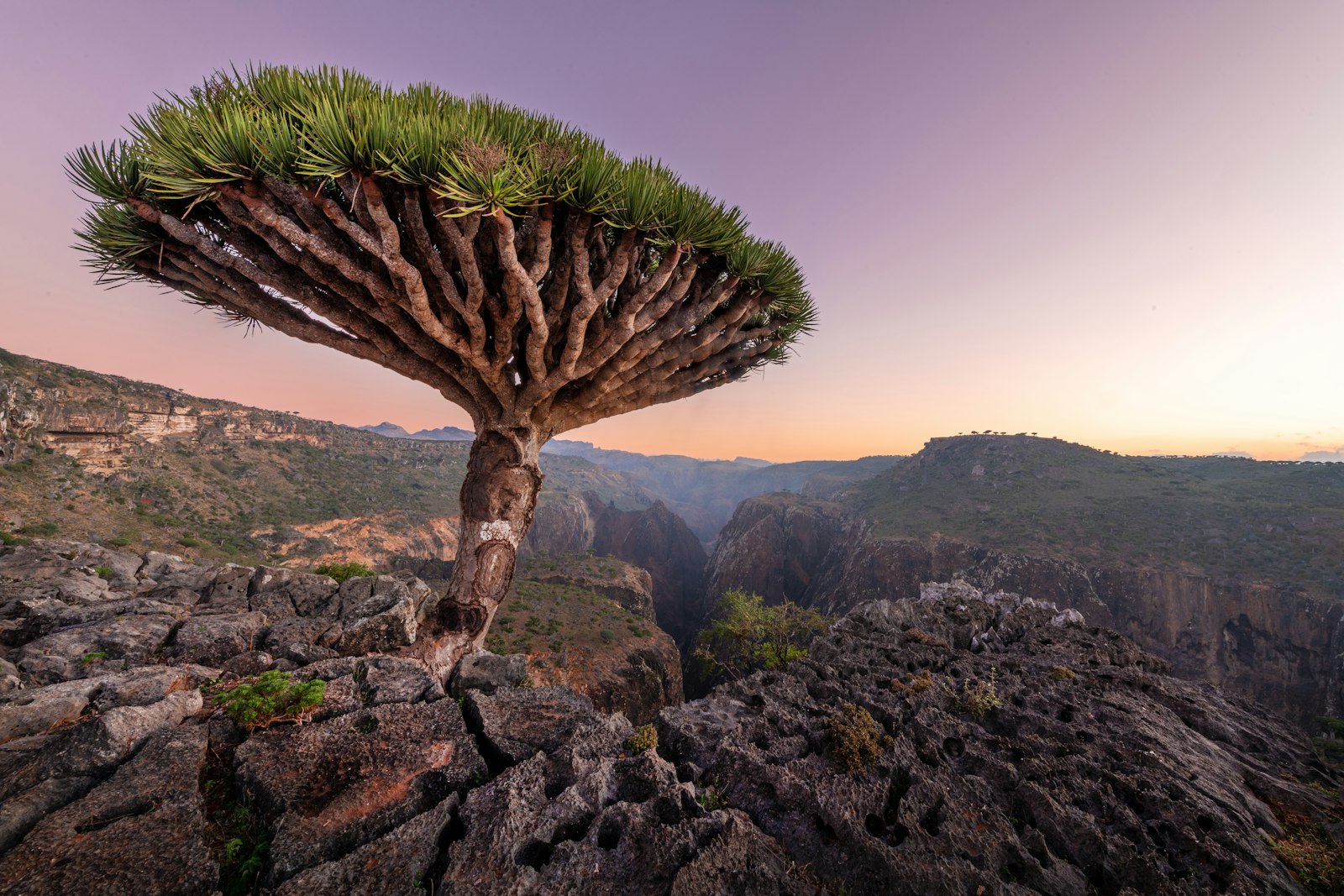
Its fame comes from isolation. Wikipedia reports that about 37 percent of its plant species are found nowhere else on Earth. The best-known is the dragon blood tree, Dracaena cinnabari, with an umbrella-shaped crown and a bright red sap used commercially.
Our 18-second Short about Socotra is below. For the quick version, see our Socotra travel guide.
Population figures differ in sources, from 50,000 to 60,000. Hadibu, the capital and largest city, had 8,545 residents at the 2004 census. Residents speak Arabic and Soqotri, a Semitic language related to Mehri and other Modern South Arabian languages.
The island has been affected by Yemen’s conflict. Wikipedia reports that UAE forces took the airport and seaport in April 2018, Saudi troops were deployed in May 2018, the UAE-backed Southern Transitional Council seized the island in June 2020, and in 2023 the Presidential Leadership Council integrated the STC and recognised its rule. That history is a reason for caution: control and rules can change.
The dragon blood tree is named for the dark red sap that oozes from its bark. Wikipedia says the one remaining dragon blood forest has an average tree age of about 300 years, which suggests the forest is over-mature, meaning few young trees are replacing old ones. That is one reason conservation matters.
Other endemic plants mentioned by Wikivoyage include the desert rose and the cucumber tree. Wildlife viewing is listed as best from late January to May. The Diksam Plateau, a limestone karst plateau, is one of the island’s well-known landscapes.
Wikipedia and Wikivoyage mention the following:
Access to many sites depends on local guides and vehicles, and security conditions can restrict where you can go.
Wikipedia says the southwest monsoon from June to September brings strong winds and high seas, and heavy rain makes travel difficult, so flights are often cancelled. It lists October to April as the ideal period. Wikivoyage gives nature visits as early October to late April, wildlife from late January to May, and a monsoon window of roughly July to mid-August, noting that sources give conflicting windows.
Take the dates as rough guidance and confirm with local sources, because weather can change schedules at short notice.
Commercial flights resumed in 2018, and local authorities issue visas, according to Wikivoyage. Socotra Airport is the only commercial airport. Wikivoyage lists Yemenia from Cairo and Felix Airlines from Dubai, while Wikipedia says weekly scheduled flights run from Cairo and Abu Dhabi. These details conflict and change, so any plan should start with confirmed, current flight information.
Visa and permit rules are decided locally, and they may not match what your government accepts. Be aware that your own government may not recognise the process.
Hotels in Hadibo are basic, and camping on beaches is the most popular option. Apart from a public bus from the airport to Hadibo and on to Qalansia, you need a car with a driver. Plan for limited services: few shops, limited electricity and little mobile coverage outside towns.
Wikivoyage gives specific advice that reflects local conditions:
Hospital care on the island is limited. Wikivoyage reports that the CDC recommends up-to-date polio and measles vaccines and advises rabies vaccination, and malaria prophylaxis is suggested though malaria is not common. Ask a travel clinic for current advice, bring a full medical kit and make sure your insurance covers medical evacuation.
Hadibu is the biggest town and the island’s capital, with 8,545 residents at the 2004 census. Wikivoyage describes hotels there as basic and says apart from one public bus you need a car with a driver, so a visitor should expect to depend on a local guide or host for food, water and transport.
The Soqotri language is a major part of island identity. Learning a few Arabic greetings, dressing conservatively and asking before taking photographs are basic courtesies. Because the island has seen several changes of control, avoid political discussions and follow your host’s advice.
The island’s ecology and culture are fragile. Take all rubbish with you, do not remove plants, rocks or shells, and respect protected areas. UNESCO recognition does not mean there is infrastructure to handle large numbers of visitors.
If you read about Socotra, you will notice conflicting figures. Wikipedia gives the population as 60,000 in the infobox and about 50,000 in the text. Wikivoyage and Wikipedia describe different airline routes. Monsoon windows are given as June to September in one source and roughly July to mid-August in another.
These differences are a reminder to treat every detail as provisional and verify with current official sources before relying on it, especially for flights, permits and security.
This is our own suggestion, not an endorsement of travel.
For most people the better choice may be to learn about Socotra from afar. Documentaries, scientific reports and the UNESCO listing offer a way to appreciate the island without the risks.
Many governments advise against all travel to Yemen, including Socotra, and the U.S. government says it cannot provide consular help there. Check your own government’s advice and your insurance before considering a trip.
Dracaena cinnabari, a tree with an umbrella-like crown and dark red sap. Socotra holds the one remaining dragon blood forest described by Wikipedia.
About 37 percent of its plant species are found nowhere else on Earth.
Wikipedia lists October to April as the ideal period. The southwest monsoon from June to September brings strong winds and cancelled flights.
By air to Socotra Airport, the only commercial airport. Routes have included Cairo, Abu Dhabi and Dubai, but they change, so confirm current information.
Yes, since 2008.
A cave on Socotra with nearly 250 inscriptions and drawings left by sailors who visited between the 1st century BC and the 6th century AD.
Socotra is part of Yemen and a governorate since 2013. Control has changed over the years, with UAE and Saudi involvement and the Southern Transitional Council, so check current news.
We checked this guide on November 8, 2026. Many governments advise against all travel to Yemen, which includes Socotra, and the U.S. government says it cannot provide consular help there. We are not recommending a trip. Read your own government’s advice and check your insurance first. Confirm details with official sources before you go.
Sources checked November 8, 2026: Wikipedia: Socotra · Wikivoyage: Socotra · U.S. State Department travel advisories