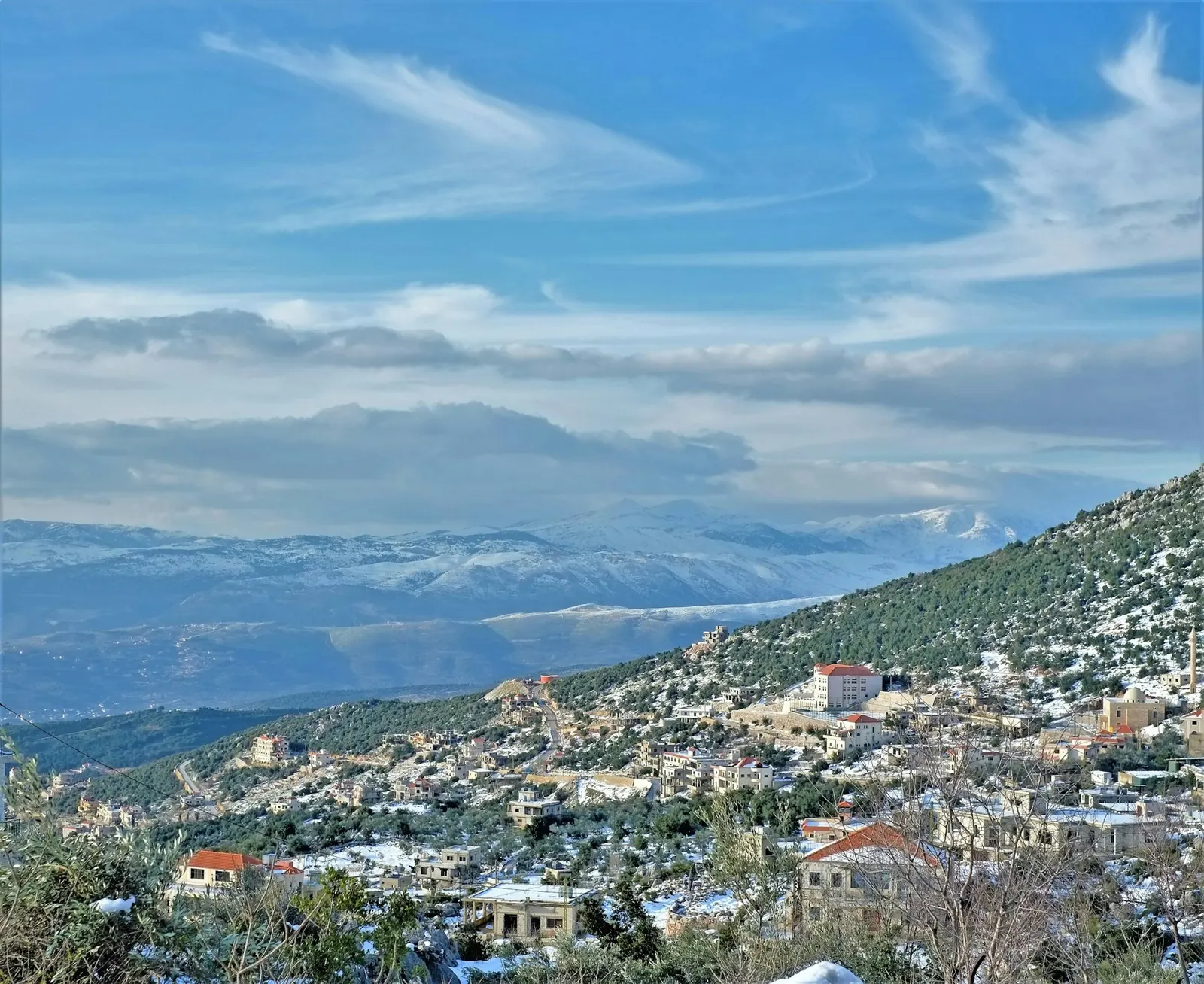
A safety-first explainer on Lebanon: why snow-covered mountains sit just inland from the Mediterranean, how the ski season works, and what current government advisories say. This is not a trip plan.
At the time of our check, the US State Department rates Lebanon at Level 4, Do not travel. The advisory was issued on 6 May 2026 and lists armed conflict, terrorism, civil unrest, kidnapping and landmines among the reasons. It also warns that hostilities can disrupt Beirut’s airport. Other governments publish their own advice, and it can differ, so read the advisory for your own nationality.
That is why this page is an explainer and not a travel plan. We think it would be irresponsible to publish a trip itinerary for a country that many governments currently advise against visiting. If you have family, work or other reasons to be there, rely on official guidance and local contacts, not on a travel blog.
Lebanon is a small country on the eastern shore of the Mediterranean. A mountain range, the Mount Lebanon range, runs parallel to the coast, with summits above 3,000 metres only a short distance inland. That sharp rise is the reason that snow on the peaks and the sea can share a single view.
The effect is strongest in winter and early spring. The coast stays mild, while the mountains collect snow from Mediterranean storms. This is the contrast we show in our Short about places where a beach and snow share a view. It is a feature of the landscape, not an invitation to visit right now.
For a shorter version, see our Lebanon page. Our Short is below.
Lebanon covers just over 10,000 square kilometres, so the distances between the sea and the high mountains are small. In a morning you can go from a coastal city at sea level to villages at 1,000 metres or more. Two main ranges run north to south, Mount Lebanon along the coast and the Anti-Lebanon range along the eastern border, with the Beqaa Valley between them.
The mountains catch moisture from the Mediterranean, which falls as rain at lower altitude and snow higher up. The snowpack feeds rivers and springs, and it is part of why the country’s water and agriculture look the way they do. Climate change and short, irregular winters are making the snow season less reliable in many mountain regions, and Lebanon is no exception.
Lebanon has six main ski resorts: Cedars, Mzaar Kfardebian, Laqlouq, Zaarour, Qanat Bakish and Faqra. They differ in size and style. Mzaar Kfardebian is the largest, with slopes at roughly 1,913 to 2,465 metres, about an hour from Beirut. A 2012 source describes about 20 lifts and around 80 kilometres of slopes, though numbers change and we could not confirm the current figures.
The Cedars resort sits higher, close to the ancient cedar forest, and is known for its higher altitude and its views. The season usually runs from about mid-December to April, depending on the snow. In some springs it has been possible to ski in the morning and swim in the sea in the afternoon, but that depends on the year and is not something to plan around.
The Cedars of God, a forest of ancient cedar trees in the north, is part of a UNESCO World Heritage Site together with the Qadisha Valley. The tree is the national symbol and appears on the flag. The valley and forest are a landscape of monasteries, cliffs and small villages that has been inhabited for centuries.
The high mountains are also home to remote villages and trails, and road conditions can change quickly in winter. We mention them to explain the geography, not to suggest a route.
The coast is a long stretch of cities and towns along the Mediterranean, with Beirut as the capital and largest city. The city is built on a headland, and on a clear winter day the snow-covered mountains can be seen behind it, which is the image behind the “snow and sea” description. Beirut’s coast also has well-known rock formations at Raouche, which appear in many photos of the city.
The coastline has been shaped by trade and settlement for thousands of years, and ports such as Byblos, Sidon and Tyre are among the oldest in the Mediterranean. Their history is a topic for another guide, and again, it does not change the present safety situation.
The coast has a typical Mediterranean climate with hot, humid summers and mild, wet winters. Winter temperatures at the coast are often in the teens in Celsius, while the mountains can be below freezing. Snow usually falls from December to March on the higher slopes, and in some years it lasts into April.
If the situation were stable, spring would be the season that best shows the contrast: warm coast, snow on the peaks. For now, treat that only as a geographic observation.
Entry rules depend on your passport, and they change. Many nationalities have received a free one-month visa on arrival in recent years, but check the current official rules for your nationality. Wikivoyage notes that a passport containing an Israeli stamp or evidence of travel to Israel can lead to entry being refused.
The country has been through a prolonged banking and currency crisis, and cash is widely needed. Prices, exchange rates and card acceptance can differ sharply from official figures, so we do not give specific numbers here.
If you are interested in Lebanon because of family, culture or study, there are many ways to support people there without travelling: read local journalism, support organisations working in the country and follow the official updates about the situation. If you are planning a trip, wait for official advisories to improve, and revisit the details then.
We will update this page if advisories change. Until then, we keep it short and cautious on purpose.
This is general advice, not a trip plan.
Many governments advise against travel. The US State Department rates Lebanon Level 4, Do not travel, as of its 6 May 2026 advisory. Check your own government’s current advice.
The Mount Lebanon range, with summits above 3,000 metres, rises close to the Mediterranean coast, so snow on the peaks and sea can share a view in winter and spring.
Six main ones: Cedars, Mzaar Kfardebian, Laqlouq, Zaarour, Qanat Bakish and Faqra.
Usually from about mid-December to April, depending on snowfall.
About one hour by road, in normal conditions.
In some springs it has been possible, but it depends on the year and is not something to plan around.
An ancient cedar forest in northern Lebanon that is part of a UNESCO World Heritage Site with the Qadisha Valley.
It depends on your passport. Many nationalities have had a free one-month visa on arrival, but check official rules for your nationality.
Because many governments advise against travel to Lebanon, we do not promote bookings there.
Yes, if official advisories change.
We do not list accommodation for Lebanon while government advisories say not to travel. If the situation changes, check current official advice and an up-to-date source before you consider any booking.
We checked this guide on November 11, 2026. This page is about geography and context, not a recommendation to travel. Advisories, borders, flights and prices can change within hours. Read your own government’s current travel advice before any decision. Confirm details with official sources before you go.
Sources checked November 11, 2026: US State Department: Lebanon travel advisory · Wikivoyage: Lebanon · Wikipedia: Skiing in Lebanon · Wikipedia: Mount Lebanon · UNESCO: Ouadi Qadisha and the Forest of the Cedars of God