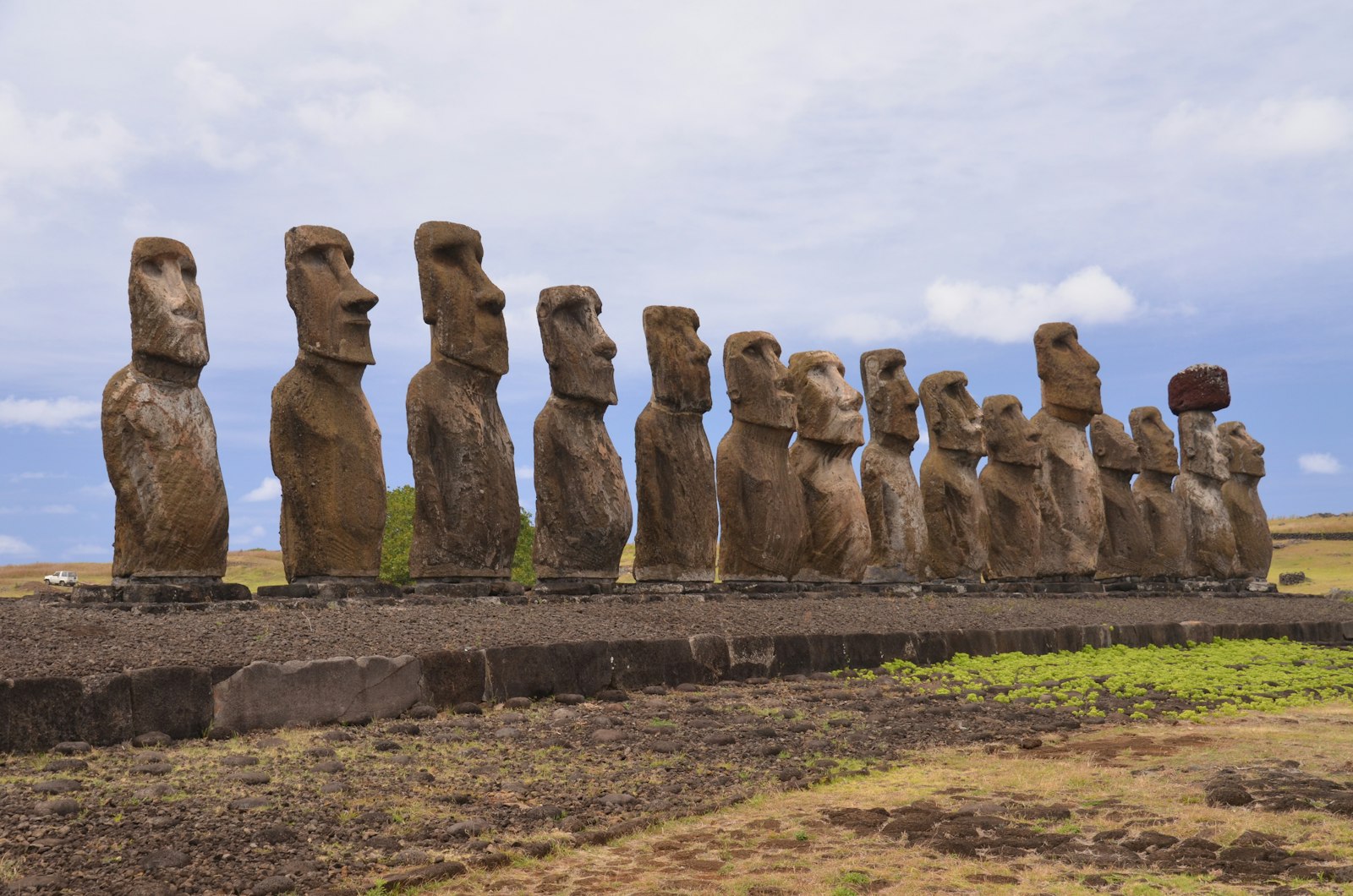
A practical guide to Rapa Nui: what the moai are and where to see them, how the national park ticket works, how to get there, entry rules, the best time to go and what it costs.
Easter Island, called Rapa Nui by its people, is a small island of about 163.6 square kilometers that belongs to Chile and has been a Chilean special territory since 2007. It is famous for its moai, the monolithic statues. The island had 7,750 residents in the 2017 census, and 45 percent of them identified as Rapa Nui. Spanish and Rapa Nui are the languages, and it is the only Polynesian territory where Spanish is official.
It is among the most remote inhabited places on Earth. The nearest town with more than 500 people, Rikitea in the Gambier Islands, is about 2,606 kilometers away, and the nearest point on the continent, in central Chile, is about 3,512 kilometers away. Most visitors fly in from Santiago and stay in Hanga Roa, the island’s only town.
Our 18-second Short about Easter Island is below. For the quick version, see our Easter Island travel guide.
Much of the island is protected in Rapa Nui National Park, and UNESCO designated the island a World Heritage Site in 1995. The statues are carved from tuff, a volcanic rock, and the main sites are:
Terevaka, the island’s highest point, can be hiked alone, and a guide is recommended for Poike and the north coast.
One ticket per person covers the archaeological sites, and it is valid for 10 days from your first site entry. Rano Raraku and Orongo can each be entered once per ticket, and other sites any number of times. Tickets are sold on the official park website or at park offices in Hanga Roa, and you show the ticket at each site. Many circuits need an accredited local guide, so confirm the current rules and prices on the park’s website before you travel.
Easter Island sits in the southeastern Pacific and has a tropical rainforest climate that borders on humid subtropical. Winters are mild, and the island gets about 1,118 millimeters of rain a year. It is administered as a single commune in Chile’s Valparaíso Region, and the Chilean government has been tightening rules to protect its heritage: the stay limit was cut from 90 to 30 days in 2018, and the island was closed to tourists entirely from 17 March 2020 to 4 August 2022 because of COVID-19.
The Rapa Nui are Polynesians, and their language is still spoken alongside Spanish. When you visit, you are visiting a living community, not only an archaeological park. The visitor economy supports local families, and booking with local guides and local guesthouses keeps more of the money on the island.
Because the island is so remote and so regulated, the order of steps matters.
Do not plan the trip as a day visit. The flight is long and the island is small, but the sites are spread out, so give yourself time.
Mataveri International Airport was built in 1965 and its runway was extended to 3,353 meters in the 1980s. Most visitors fly LATAM from Santiago (SCL) to Mataveri (IPC). Flights run roughly daily, with extra flights from December to March, and one island guide recommends booking the Santiago leg directly with the airline. A route from Tahiti has not operated since 2020. Around 25 cruise calls a year also reach the island.
Since 2018, the maximum stay for tourists has been 30 days, cut from 90 to protect the island’s heritage. Most visitors must complete the Single Entry Form online before boarding in Santiago, and you need a registered lodging that matches it. Staying with friends requires a letter from your host. Citizens of the USA, EU and Canada generally need a passport and a ticket showing departure within 90 days, but confirm the rules for your own passport on official sites.
Climate is mild all year. The average temperature peaks in February, with highs around 28 °C, and the lowest minimums are around 15 °C in July and August. May is the rainiest month, and the island gets about 1,100 millimeters of rain a year.
One local guide recommends staying at least five nights, which gives you time for the main sites, a spare weather day and the beach. That is our suggestion as well: two days for the moai circuits, one for Orongo and the crater, and one for the coast and beaches.
Hanga Roa is the only town and is walkable. Cars and e-bikes can be rented for the sites. The Chilean peso is the official currency. Prices are far above mainland Chile because goods are flown or shipped in. Theft from rooms is the main risk, so use hotel safes.
Respect the sites. Do not climb on platforms, touch the statues or move stones, and follow the signs and your guide.
This is our own suggestion, not an official itinerary.
Put the national park ticket date on your calendar: it is valid for 10 days, so you do not need to rush the sites, but you do need to enter once each for Rano Raraku and Orongo.
Most visitors fly LATAM from Santiago to Mataveri Airport. Flights run roughly daily, with extra flights from December to March. A route from Tahiti has not operated since 2020, according to one island guide.
One local guide recommends at least five nights. That gives you time for the main sites, a weather buffer and the beach.
One ticket per person covers all sites and is valid for 10 days from your first entry. Rano Raraku and Orongo can each be entered once, and other sites any number of times.
Most visitors must complete the Single Entry Form online before the flight from Santiago, and show registered lodging. Confirm current rules on official Chilean sites.
Since 2018, tourists can stay for a maximum of 30 days, down from 90.
November to March is summer with strong sun and the most visitors. May to August is cooler and wetter. The Tapati festival peaks in the first two weeks of February.
887 monolithic statues have been inventoried, and the island is often described as having nearly 1,000. About 95 percent were carved at the Rano Raraku quarry.
Prices are far above mainland Chile because goods are flown or shipped in, and accommodation books up in high season, so reserve early.
Hanga Roa is the only town and the base for every visit. Compare prices and reviews, and check the cancellation terms before you reserve.
See stays in Hanga Roa on Booking.com →
Some links on this page are affiliate links. If you book through them, Letsa Atlas may earn a small commission at no extra cost to you.
We checked this guide on November 8, 2026. Entry forms, park ticket prices, flights and festival dates change, so check the official Chilean and park sites before you book. Confirm details with official sources before you go.
Sources checked November 8, 2026: Wikipedia: Easter Island · Easter Island Travel guide · Rapa Nui National Park