A practical guide to Baarle-Hertog and Baarle-Nassau: how a single town is split between Belgium and the Netherlands, the enclaves, the sights along the border, how to walk the route and how to get there.
Baarle is a single town split between Belgium (Baarle-Hertog) and the Netherlands (Baarle-Nassau). Wikipedia gives Baarle-Hertog a population of 3,083 on 1 January 2025 and an area of about 7.4 square kilometres. The Belgian municipality is made up of 26 separate parcels, and the largest single section is Zondereigen. Wikipedia lists 22 Belgian exclaves (numbered H1 to H22) inside the Netherlands and 8 Dutch enclaves or counter-enclaves (N1 to N8) inside Belgian territory.
Counts differ between sources, so we avoid quoting one number as final. What matters for a visitor is simple: in this town the border zigzags between houses, shops and streets, and you can walk across it many times in a few minutes.
Our 18-second Short about Baarle is below. For the quick version, see our Baarle travel guide.
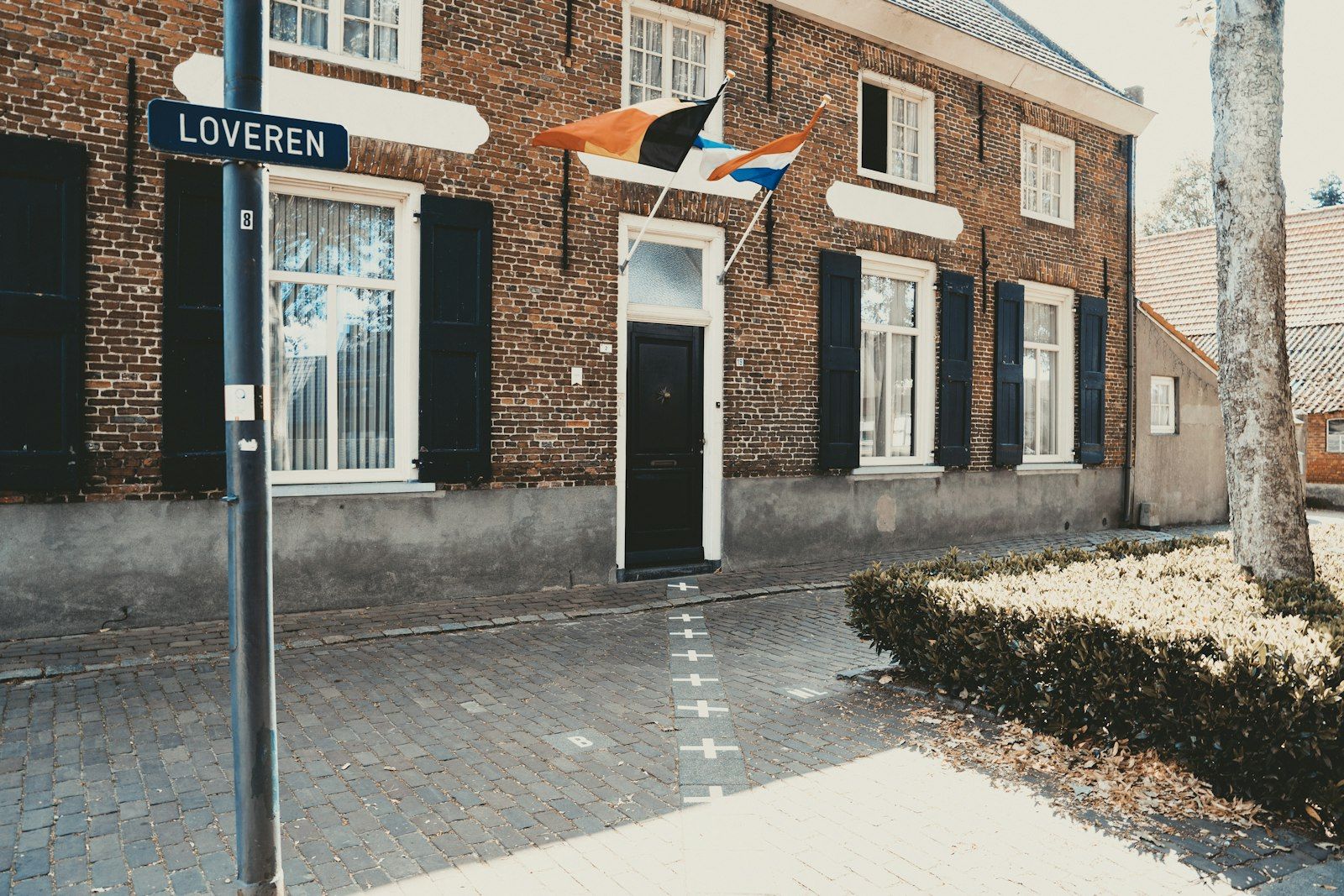
The rule is simple: a house belongs to the country where its front door stands. On Loveren Street, one house has both a Belgian number (2) and a Dutch number (19), and Wikipedia also notes that one border house, H7, has two house numbers, one from each municipality. Many house plates carry a small flag, so you can read the border while you walk.
The line was set in medieval land deals. Our Short and travel guides describe a 1198 land deal in which the Duke of Brabant gave part of the land to the Lord of Breda and kept parcels that paid rent. Wikipedia says the border was ratified and clarified under the Treaty of Maastricht of 1843, and notes a boundary treaty of 26 April 1974 that left enclave H22’s nationality unallocated. Some travel guides say the border was formally fixed in 1995, which is the year Wikipedia links to the end of H22’s contested status. In short, the history is layered, and the exact date depends on what you count.
Both countries are in the Schengen Area, so you do not show a passport to cross the street. Look for white crosses marked B or NL on the pavement, silver discs on the road, and signs on lamp posts that tell you which country you are standing in.
The tourist information centre in Baarle-Nassau hands out a walking map in a “Welcome in Baarle” brochure. The route is about 5 kilometres and flat, with silver markers on the ground. A marked Enclave Route for bikes reaches more enclaves in the countryside.
Travel guides mention these stops:
The border has real effects. Wikipedia explains that Dutch restaurants once had to close earlier than Belgian ones, so some border restaurants moved customers to tables on the Belgian side. COVID-19 rules in 2020 differed between the two countries, which kept a Belgian resident from patronising an open Dutch bar nearby. Belgian fireworks laws are more lenient, so many fireworks shops operate there and Dutch tourists visit to buy fireworks for New Year.
After World War II butter reportedly went from the Netherlands into Belgium, and in later years fireworks went the other way. If you buy fireworks, check the rules before carrying any across the border.
During World War I, the Netherlands’ refusal to let German forces cross its territory left the Belgian areas as a refuge for stranded residents. The Dutch government fenced them off and built a church and school for them, according to Wikipedia. It is a reminder that the odd border here has shaped everyday life.
Today Baarle-Hertog has two elementary schools and shares a joint library with Baarle-Nassau, so cooperation is routine.
The Baarle pancake has cheese and ham on one half and cherries and powdered sugar on the other. Den Engel is a brasserie on the main square, on the Dutch side, close to the tourist office. Some tables sit only steps from another country. Opening hours differ by season and by side of the border, and the tourist office keeps short hours. Some museums open only by appointment, and shops open on Sundays.
From Antwerp, about 50 kilometres away, take a train to Turnhout, then bus 460 toward Baarle. The ride is around 20 minutes, and buses ran roughly hourly when one traveller visited. Another bus line connects Tilburg and Breda to Baarle. By car, the N260 and N639 (Netherlands) and the N119 (Belgium) lead in.
Baarle-Nassau is the Dutch municipality surrounding the Belgian parcels. Wikipedia gives it a population of 6,899 in January 2021 and an area of 76.29 square kilometres, in the province of North Brabant. The 22 Belgian exclaves are scattered through it, and eight Dutch enclaves lie inside Belgian parcels: six in the largest Belgian exclave (H1), one in the second-largest (H8), and one in Zondereigen.
H1 is the largest Belgian exclave at about 153.6 hectares, and H7 is the smallest parcel at 2,469 square metres. The complexity comes from medieval treaties, agreements, land swaps and sales between the Lords of Breda and the Dukes of Brabant. Mostly agricultural or built areas generally went to Brabant, while other parts went to Breda.
Iron pins mark the border along all streets, so visitors can tell whether they are in Belgium or the Netherlands, and house numbers follow each country’s style with a flag beside them. Wikipedia notes that these markings are partly for the interest of tourists. Baarle-Nassau has two primary schools and one secondary school, and the two municipalities share a joint library.
These are our own suggestions based on the sources above, not official advice.
If you have more time, cycle the Enclave Route to see how the pieces fit together in the countryside, not just in the town centre.
This is our own suggestion, not an official itinerary.
Both. It is a single town split between Belgium (Baarle-Hertog) and the Netherlands (Baarle-Nassau).
A house belongs to the country where its front door stands.
Sources differ. Wikipedia lists 22 Belgian exclaves and 8 Dutch enclaves, while some travel guides give other counts, so we avoid quoting one number as final.
No. Both countries are in the Schengen Area, but carry ID as you would anywhere.
Train to Turnhout, then bus 460 toward Baarle, about 20 minutes.
About 5 kilometres, flat, with silver markers on the ground.
Belgian fireworks laws are more lenient, so many fireworks shops operate there. Check rules before carrying any across the border.
Yes. Some restaurants and cafes sit on or near the line, with tables only steps from the other country.
Wikipedia gives Baarle-Nassau a population of 6,899 in January 2021 and Baarle-Hertog 3,083 in January 2025.
Yes. Iron pins and white crosses mark the border along streets, and house numbers follow each country’s style with a flag beside them.
Baarle itself is the easiest base. Compare prices and reviews, and check the cancellation terms before you reserve.
See stays in Baarle on Booking.com →
Some links on this page are affiliate links. If you book through them, Letsa Atlas may earn a small commission at no extra cost to you.
We checked this guide on November 8, 2026. Opening hours differ by season and by side of the border, and rules differ between the two countries. Confirm hours and transport with the local tourist office before you go. Confirm details with official sources before you go.
Sources checked November 8, 2026: Wikipedia: Baarle-Hertog · Baarle tourist information (via travel guides)