A practical guide to Antalya on Türkiye’s Mediterranean coast: the beaches and old town, the ski centre about an hour away, the Olympos cable car, the weather by season and where to stay.
Antalya is a large city and tourism hub on the southwest Mediterranean coast of Türkiye. It sits near sea level, has a long sunny season and a mild winter, and has the Taurus Mountains rising steeply behind it. That layout is why it appears in our Short about places where a beach and snow share a view.
The key facts are simple. The coast has about 2,900 or more hours of sunshine a year, with a typical January high of around 15 °C and a July high near 35 °C. The mountains behind the city carry snow in winter, and the Saklikent ski centre is about an hour’s drive away. Snow is not guaranteed and the ski centre is small, so it is a bonus and not a reason to book alone.
For the quick overview, see our Antalya page. Our Short is below.
Antalya was founded in the 2nd century BC as Attaleia by King Attalos II of Pergamon, which is where the name comes from. The old town, Kaleici, is the best place to feel that history. Its narrow lanes are lined with Ottoman houses, small hotels and cafés, and it sits above a small harbour.
The best-known landmark is Hadrian’s Gate, a triumphal arch from the 2nd century built to honour the visit of the Roman emperor Hadrian. The old town is easy to walk, and an afternoon there is enough to see the main sights.
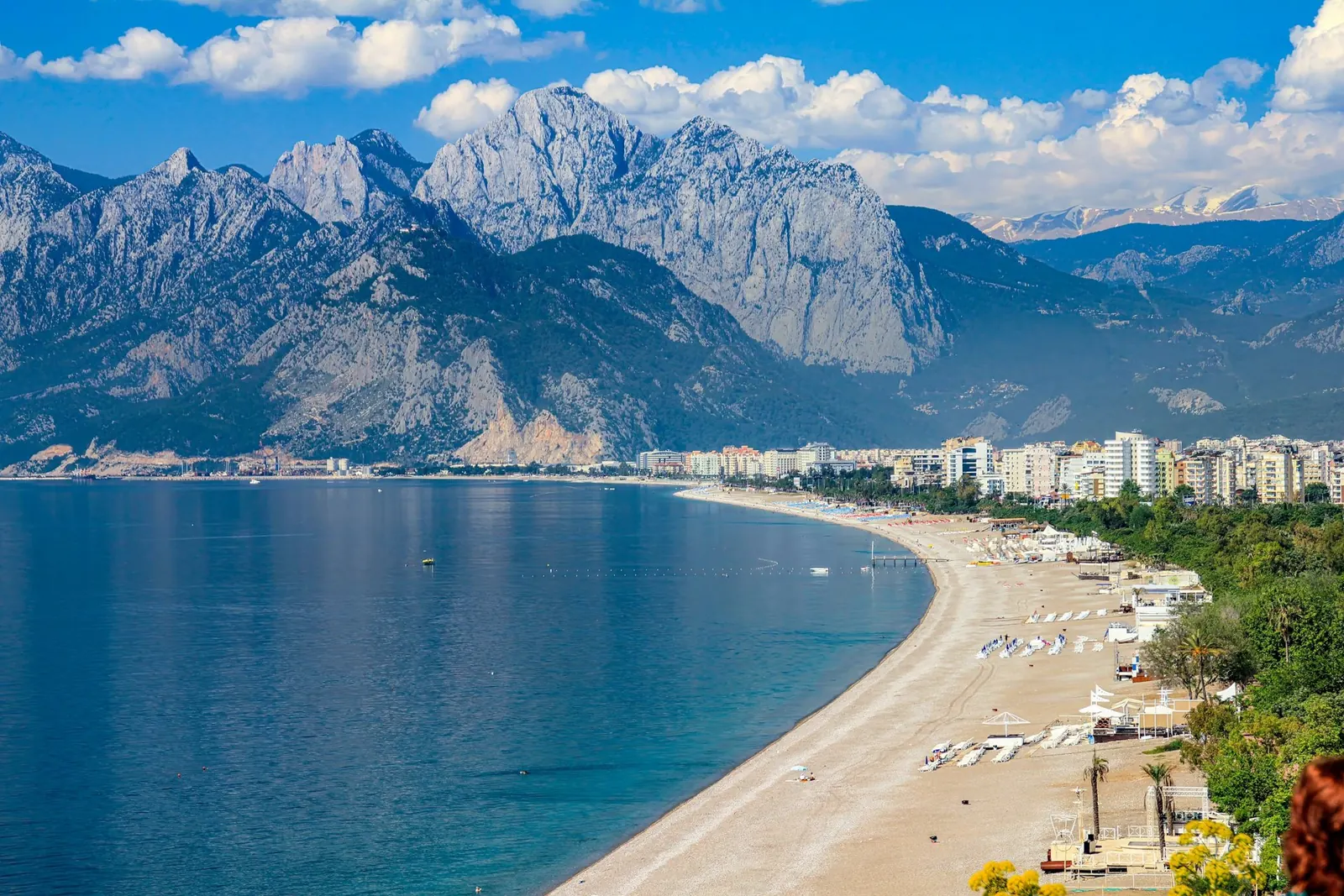
Konyaalti is the long pebble beach on the west side of the city, with the mountains rising directly behind it, which is the view in our banner photo. Lara beach lies on the east side and is known for its sand and its resort hotels. Both are easy to reach from the centre by bus or taxi.
The sea is about 16 °C in winter and around 27 °C in summer, so swimming is comfortable from late spring to autumn. In winter the beach is for walking and photos, not for a long swim. Always follow the flags and the lifeguards.
Two places make the “beach and snow” story possible. The first is Saklikent ski centre in the Taurus Mountains, roughly 35 to 45 kilometres from the city depending on the source, about an hour’s drive. Sources give slightly different elevations, around 1,850 to about 2,500 metres. The season usually runs from about mid-December to late March or early April, with roughly 10 kilometres of slopes and a small lift system.
A weekend shuttle runs from Antalya, and winter tyres or chains are mandatory on the mountain road. Check the ski centre’s official channels for snow and lift status on the day, because a short season means conditions vary a lot.
The second place is Tahtali, a 2,365-metre peak near Kemer reached by the Olympos cable car. The ride takes about 15 minutes, and the station is about 30 minutes by car from Kemer. Wind and weather can close the cable car, so check before you go. From the top you can see the coast and the mountains together, which is the clearest way to see the beach-and-snow contrast without skiing.
For beaches, late spring to early autumn is the obvious choice. July and August are very hot, with highs near 35 °C, so many visitors prefer May, June, September and October when the water is warm and the heat is easier. Rainfall is about 1,050 millimetres a year, most of it in winter.
For snow, aim for January and February. Even then, a warm spell can melt the lower slopes, so keep the plan flexible and treat the mountain day as a possible extra.
Antalya has more than beaches. The Düden waterfalls are close to the city, with the lower falls dropping toward the sea, and Kurşunlu waterfall in a park to the northeast of the centre. Both are easy short stops.
The mountains and pine forests around Kemer are a good day out, and the coast has ruins and old harbours within a short drive. Choose one or two and leave time for the beach.
Antalya has its own international airport, about 10 kilometres from the centre, which makes it one of the easiest Turkish coastal destinations to reach. Buses and a tram serve the city, and taxis are plentiful. A rental car makes Saklikent, Kemer and the mountains simpler, though mountain roads in winter need proper tyres or chains.
If you do not want to drive, join a guided day trip or use the weekend shuttle to the ski centre, and confirm the timetable before you go.
For history and evenings out, Kaleici is the charming choice, with small boutique hotels. For a beach holiday, Konyaalti and Lara are the main areas, with larger hotels and direct beach access. If you plan a lot of time in the mountains, Kemer is a good base for the Olympos cable car.
Antalya works well as a base for day trips. Kemer and the Olympos area to the west combine pine-covered mountains, small beaches and the cable car, while the coast to the east has Roman ruins, old harbours and long sandy beaches. Distances are moderate, but traffic on summer weekends can slow the main roads, so start early.
If your time is short, choose one direction per day instead of trying to cover the whole coast. A relaxed day of two stops beats a rushed day of five, and it leaves time for a swim or a meal by the water.
These are our own suggestions, not official advice.
Prices, opening hours and schedules change from season to season, so treat the details above as a starting point and confirm them locally.
Antalya’s food scene mixes Turkish coastal cooking with fresh seafood and regional dishes. The old town and the harbour have the most atmospheric places to eat, and Konyaalti and Lara have beachfront restaurants. In the evening, the old town is lively, so book ahead for busy summer weekends and look for places where locals eat if you want better value.
Entry rules depend on your passport. Many nationalities can enter visa-free or with an e-visa for short stays, but this changes, so check the official Turkish rules for your nationality, and check how long your passport must be valid.
This is our own suggestion, not an official itinerary.
Yes. Saklikent ski centre is about an hour away, with a short season from about mid-December to late March or early April.
Roughly 35 to 45 kilometres, about an hour by car, depending on the source and the road.
Winter tyres or chains are required on the mountain road in winter.
2,365 metres. The Olympos cable car near Kemer takes about 15 minutes to reach it.
It is sometimes possible in late winter, but it depends on the weather, the sea temperature of about 16 °C and the snow, so do not count on it.
May, June, September and October for warm water and manageable heat. January and February for snow in the mountains.
A typical July high is close to 35 °C, while January highs are around 15 °C.
Yes, about 10 kilometres from the centre.
A triumphal arch from the 2nd century in Kaleici, built to honour a visit by the Roman emperor Hadrian.
It depends on your passport. Check the official Turkish rules for your nationality.
Compare guided tours, day trips and tickets around Antalya, with reviews and free-cancellation options.
Find tours in Antalya on Viator →
Travel insurance. Medical care abroad can be expensive, so many travellers buy cover before they leave. One option is SafetyWing Nomad Insurance. Read the policy wording to see what it covers before you buy.
Most visitors stay in the city around Kaleici, Konyaalti or Lara, or in the resort areas along the coast. Compare prices and reviews, and check the cancellation terms before you reserve.
See stays in Antalya on Booking.com →
Some links on this page are affiliate links. If you book through them, Letsa Atlas may earn a small commission at no extra cost to you.
We checked this guide on November 11, 2026. Ski season, lift operations, prices, opening hours and entry rules change. Confirm them with the operators and with your own government before you travel. Confirm details with official sources before you go.
Sources checked November 11, 2026: Wikipedia: Antalya · Wikipedia: Saklıkent · Wikipedia: Tahtalı · Wikivoyage: Antalya